
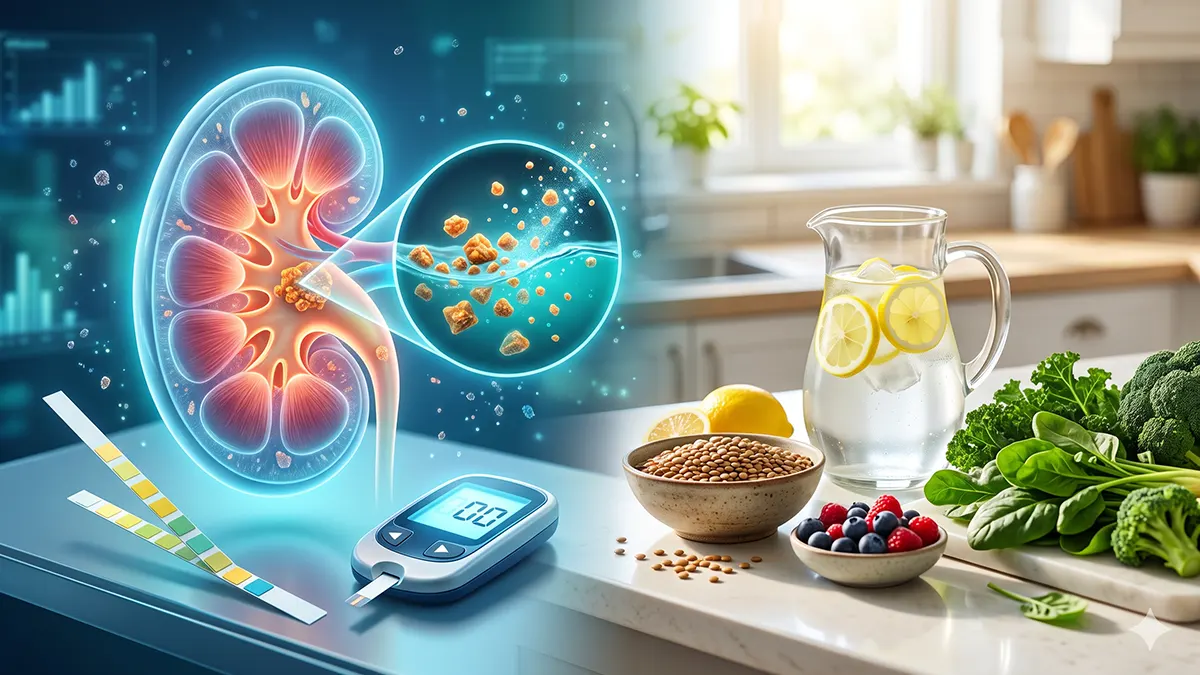
Learning how to dissolve uric acid stones—and understanding why acidic urine kidney stones form when you have high blood sugar—can save you from painful recurring attacks and unnecessary surgery. Most people only hear about calcium stones (covered in our Calcium Oxalate Kidney Stones Guide), which cannot be dissolved once they crystallize. Even after cutting back on spinach and nuts from our Oxalate-Rich Foods List, many patients still develop stones because their urine is overly acidic.
According to clinical guidelines from the National Kidney Foundation, uric acid stones account for about 7% of all kidney stones globally—and their rate rises sharply in adults with type 2 diabetes, insulin resistance, obesity, gout, or metabolic syndrome.
Here is the medical breakthrough every stone patient should know: unlike calcium stones, you can often dissolve uric acid stones naturally and medically by raising your urine pH (making your urine less acidic) through targeted hydration, an alkaline-promoting diet, and doctor-prescribed citrate therapy.
Table of Contents
Key Takeaways: How to Dissolve Uric Acid Stones & Control Urine Acid
- Only common dissolvable stone: While calcium stones must pass on their own or be removed, doctors can frequently dissolve uric acid stones right inside the kidney by raising urine pH.
- Acidic urine is the #1 trigger: Acidic urine kidney stones form when your urine pH drops too low (typically below 5.5) and becomes concentrated with uric acid—even if you eat zero high-oxalate foods.
- The Diabetes & Insulin Resistance link: Clinical research published by the National Institutes of Health (NIH) shows that insulin resistance and type 2 diabetes impair your kidneys’ ability to neutralize urine acid.
- Plant purines vs. meat purines: Purines from red meat, organ meats, shellfish, and beer lower urine pH and block efforts to dissolve uric acid stones, whereas plant purines from beans, lentils, and soy do not increase stone risk.
Why High Blood Sugar Causes Acidic Urine Kidney Stones
On Healthy Way Care, many readers follow our Foods That Cause Kidney Stones Avoid List and stop eating spinach, peanuts, and wheat bran, only to be shocked when a new stone appears on an ultrasound.
The reason is simple: cutting out oxalates only protects you against calcium oxalate stones. Acidic urine kidney stones form through a completely different metabolic pathway:
- Purine breakdown produces uric acid: Uric acid is a natural waste product created when your body breaks down purines—compounds found in high concentrations in red meat, processed meat, poultry, organ meats, seafood, high-fructose corn syrup, and alcohol (especially beer).
- Insulin resistance makes urine overly acidic: When you have prediabetes, type 2 diabetes, obesity, or metabolic syndrome, insulin resistance reduces ammonia production in your kidney tubules. Without enough ammonia to buffer acid, your urine pH drops into a highly acidic zone.
- Acidic urine turns liquid uric acid into solid crystals: In neutral or slightly alkaline urine, uric acid stays dissolved and flushes out harmlessly. In highly acidic, concentrated urine, uric acid rapidly precipitates into sharp crystals. Raising your urine pH reverses this process and helps dissolve uric acid stones.
How to Prevent Calcium Oxalate Kidney Stones
Related Guide on Healthy Way Care: Managing blood glucose alongside kidney health? Read our guide on Diabetes and Heart Disease: 7 Essential Risks, Symptoms & Prevention and Intermittent Fasting and Kidney Stone Risk: What You Need to Know.
5 Hidden Everyday Triggers of Acidic Urine Kidney Stones
1. Insulin Resistance, Type 2 Diabetes, and Metabolic Syndrome
Many patients assume kidney stones are purely a plumbing problem caused by what they drank yesterday. In reality, recurring acidic urine kidney stones are often an early warning sign of systemic metabolic stress.
- Why it happens: Elevated blood sugar and insulin resistance block your kidneys from excreting uric acid efficiently while lowering your urine pH. This double hit makes people with type 2 diabetes up to three times more likely to develop uric acid stones than the general population.
- What to do next: If you want to dissolve uric acid stones and prevent new ones, ask your doctor to check your fasting blood glucose, HbA1c, and serum uric acid levels alongside a 24-hour urine test.
2. High-Protein Diets Heavy in Red Meat, Organ Meats, and Shellfish
Switching to a low-carb, high-meat diet to lose weight or control blood sugar is a common trigger for sudden acidic urine kidney stones.
- Why it happens: Animal protein—especially beef, pork, lamb, organ meats (liver), sardines, anchovies, and shellfish—delivers a heavy purine load while simultaneously forcing your kidneys to excrete more acid. That extra acid lowers your urine pH and makes it impossible to dissolve uric acid stones without dietary changes.
- Kidney-friendly swap: Replace part of your daily meat portions with plant-based proteins like lentils, chickpeas, beans, and tofu or 2 to 3 servings of low-fat dairy, which do not raise urinary acid.
Read Also on Healthy Way Care: Curious why dairy protects against stones? Read The Paradox of Calcium: Why You Shouldn’t Stop Dairy to Prevent Stones.
3. Beer and Alcohol (The Dangerous Purine + Dehydration Trap)
A widespread myth claims that drinking beer helps flush out kidney stones. When trying to dissolve uric acid stones, beer is one of the worst beverages you can drink.
- Why it happens: Beer is exceptionally rich in guanosine, a rapidly absorbed purine that causes a sharp spike in blood and urinary uric acid, while alcohol’s diuretic effect dehydrates your kidneys and concentrates urine acid.
- Kidney-friendly swap: Cut out beer and spirits, and hydrate with plain water infused with fresh lemon or lime juice.
Read Also on Healthy Way Care: Beer for Kidney Stones: Myth or Dangerous Mistake? and Is Gatorade Good for Kidney Stones? Complete Medical Guide.
4. Sugary Drinks and High-Fructose Corn Syrup
Even if you avoid alcohol and red meat, sweetened sodas, packaged fruit punches, and energy drinks sweetened with high-fructose corn syrup (HFCS) silently fuel acidic urine kidney stones.
- Why it happens: Unlike glucose, fructose is metabolized in the liver through a pathway that consumes cellular energy (ATP) and generates large amounts of uric acid within minutes of drinking a sugary beverage, while also worsening insulin resistance.
- Kidney-friendly swap: Trade sugary sodas and sports drinks for plain water or unsweetened sparkling water in moderation (see The Truth About Sparkling Water and Kidney Stones).
5. Chronic Dehydration, Sweating, and Low Fruit/Vegetable Intake
When you don’t drink enough water—or lose fluids through heavy sweating, hot weather, or chronic diarrhea—your urine volume drops and becomes highly acidic.
- Why it happens: Fruits and vegetables (except a few high-oxalate items) provide natural potassium and citrate, which your body converts into bicarbonate to neutralize urine acid. Eating a diet low in fruits and vegetables leaves your urine acidic all day long.
- Kidney-friendly swap: Aim for at least 5 servings of fruits and vegetables daily and drink enough water (80 to 100 fluid ounces per day) to produce at least 2.5 liters of pale yellow urine every 24 hours.
10 Oxalate Rich Foods List: What to Avoid for Kidney Stones
Quick Comparison Table: Dissolvable Uric Acid Stones vs. Calcium Oxalate Stones
Knowing whether your stone can be dissolved changes your entire treatment plan:
| Feature | Uric Acid Stones (Acidic Urine) | Calcium Oxalate Stones |
| Share of All Kidney Stones | About 7% globally (much higher in people with diabetes or gout) | About 75% to 80% of all kidney stones |
| Primary Urine Trigger | Overly acidic urine (low pH) + high uric acid | High urinary oxalate + high urinary calcium + low citrate |
| Top Dietary Triggers | Red/processed meats, organ meats, seafood, beer, high-fructose corn syrup | Spinach, rhubarb, peanuts, almonds, wheat bran, excess salt |
| Can You Dissolve the Stones? | Yes — you can often dissolve uric acid stones by raising urine pH | No — cannot be dissolved once formed; must pass or be removed |
| Visibility on Standard X-Ray | Often invisible (radiolucent) on plain X-rays; best seen on CT or ultrasound | Clearly visible (radiopaque) on standard X-rays and CT scans |
| Key Medical Therapy | Potassium citrate or sodium bicarbonate to alkalize urine | Hydration, dietary calcium with meals, low sodium, thiazides/citrate |
How to Dissolve Uric Acid Stones and Prevent Recurrence (6-Step Plan)
Because uric acid crystals only stay solid in acidic urine, medical and dietary strategies to dissolve uric acid stones focus on alkalizing your urine (raising urine pH) and increasing urine volume:
- Ask your doctor about prescription urine alkalizers: Small-to-moderate stones can often be dissolved right inside the kidney using prescription potassium citrate or sodium bicarbonate to raise your urine pH into the target dissolution zone (typically pH 6.5 to 7.0, monitored by your physician).
- Drink 80 to 100 ounces of fluid daily: Producing at least 2.5 liters of urine per day dilutes uric acid and helps dissolve uric acid stones faster.
- Eat at least 5 servings of fruits and vegetables every day: Fruits and vegetables supply natural alkali precursors that raise urine pH and reduce urine acid levels naturally.
- Limit animal purines, not plant purines: Cut back on red meat, processed meats, organ meats, poultry, and shellfish. Clinical guidelines from the National Kidney Foundation confirm that plant sources of purines—such as beans, lentils, peas, and soy—do not cause acidic urine kidney stones.
- Include 2 to 3 servings of low-fat dairy daily: Skim or low-fat milk and plain yogurt help lower serum uric acid levels while supporting healthy blood pressure.
- Request a 24-hour urine test: Ask your urologist or nephrologist for a 24-hour urine collection to measure your exact urine pH, uric acid output, citrate levels, and total urine volume so your plan to dissolve uric acid stones is customized to your body.
Read Also on Healthy Way Care: Curious whether home remedies like apple cider vinegar affect urine acid? Read Apple Cider Vinegar for Kidney Stones: Does It Work? and check our Kidney Stone Pain Location Chart.
Conclusion
If you manage high blood sugar, prediabetes, gout, or extra weight—or if you keep forming stones despite avoiding oxalates—acidic urine kidney stones should be at the top of your radar. By testing your urine pH, drinking 80 to 100 ounces of water daily, swapping excess red meat and beer for alkaline-rich fruits, vegetables, legumes, and low-fat dairy, and working with your doctor on potassium citrate therapy, you can successfully dissolve uric acid stones and stop new ones from forming.
Frequently Asked Questions (FAQs)
1. Can you really dissolve uric acid stones without surgery?
Yes. Unlike calcium stones, you can often dissolve uric acid stones by raising your urine pH (making your urine less acidic) using doctor-prescribed medications such as potassium citrate or sodium bicarbonate, paired with high fluid intake (80 to 100 ounces daily).
2. Why do diabetes and insulin resistance cause acidic urine kidney stones?
Insulin resistance and type 2 diabetes impair your kidneys’ ability to excrete ammonia into urine, which makes your urine abnormally acidic (low pH). In overly acidic urine, dissolved uric acid rapidly crystallizes into solid acidic urine kidney stones.
3. How long does it take to dissolve uric acid stones with medication and diet?
Depending on the size of the stone and how consistently your urine pH is maintained in the target alkaline zone (typically pH 6.5 to 7.0 under medical supervision), medical therapy with potassium citrate or sodium bicarbonate can dissolve uric acid stones over several weeks to a few months, verified by follow-up ultrasound or CT imaging.
4. Do beans and lentils cause uric acid stones?
No. According to the National Kidney Foundation, plant-based sources of purines—such as beans, lentils, peas, and soy foods—have not been shown to increase stone risk and actually help make urine less acidic when replacing red meat.
5. Why didn’t my uric acid stone show up on a regular X-ray?
Pure uric acid stones are radiolucent, meaning standard X-rays pass right through them without leaving a bright white shadow. Doctors typically use a non-contrast CT scan or kidney ultrasound to locate these stones and confirm whether treatments to dissolve uric acid stones are working.
6. How much water should I drink daily to help dissolve uric acid stones?
Most adults working to dissolve uric acid stones should drink 80 to 100 fluid ounces (about 2.5 to 3 liters) of fluid daily—primarily water—to produce at least 2.5 liters of urine every 24 hours, unless a doctor prescribes a different fluid target.
Author & Editorial Standards
Written by Yamanandan Reddy — Health & Wellness Writer Yamanandan Reddy writes research-backed patient education guides at Healthy Way Care, helping readers understand kidney stone types, urinary symptoms, diabetes management, and clinical nutrition using official medical guidelines.
Medical References & Clinical Sources:
- National Kidney Foundation (NKF) — Uric Acid Kidney Stones: Symptoms, Treatment, & Prevention
- National Institutes of Health (NIH / PMC) — Role of Insulin Resistance in Uric Acid Nephrolithiasis
- Cleveland Clinic — Uric Acid Stones: Causes, Symptoms & Treatment
Medical Disclaimer: The information provided on Healthy Way Care is for educational and informational purposes only and is not a substitute for professional medical advice, diagnosis, or treatment. Always consult a qualified physician, urologist, nephrologist, or registered dietitian before starting any medication or dietary plan.