
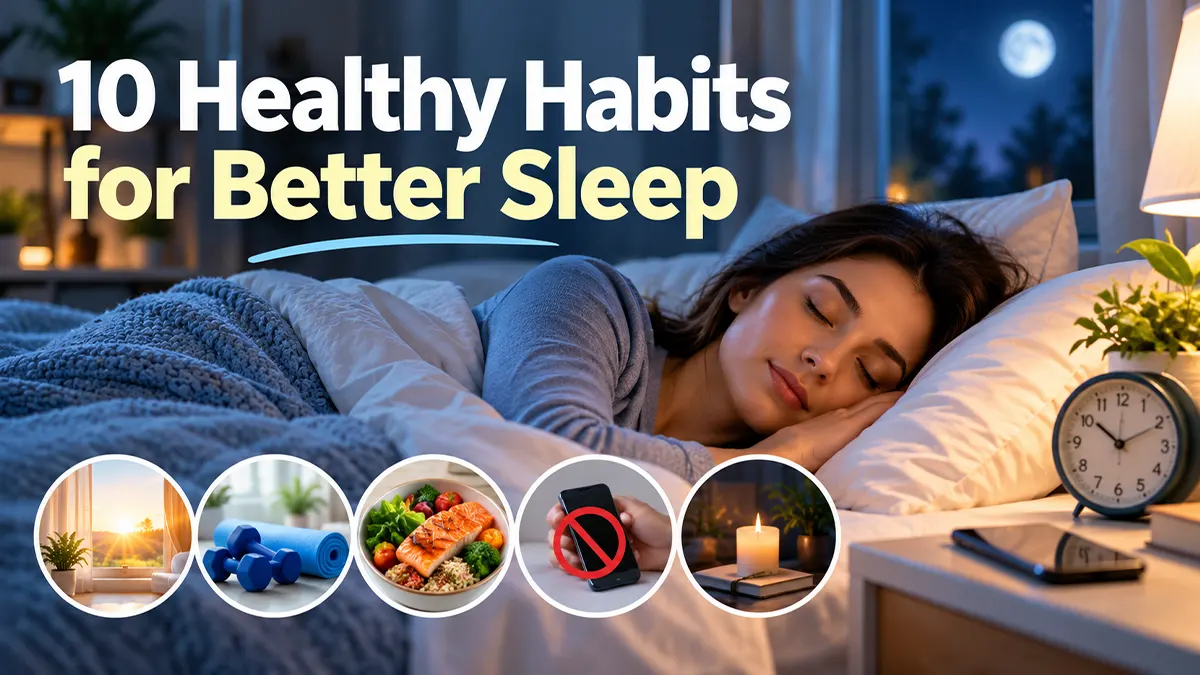
How to Sleep Better at Night? Start with a consistent sleep and wake schedule, give yourself enough time for sleep, keep your bedroom cool, quiet, and dark, reduce screens before bed, and limit caffeine, alcohol, and heavy meals close to bedtime. Regular daytime activity and a relaxing pre-bed routine can also support better sleep. Most adults need at least 7 hours of sleep per night, although individual needs vary.
If you regularly have trouble falling or staying asleep, wake up unrefreshed, or experience loud snoring, gasping, or significant daytime sleepiness, healthy sleep habits alone may not be enough. A healthcare professional can help determine whether insomnia, sleep apnea, or another sleep problem is contributing.
Key Takeaways
- How to Sleep Better at Night starts with a consistent sleep schedule.
- Most adults should regularly get 7 or more hours of sleep.
- Keep your bedroom cool, quiet, dark, and comfortable.
- Turn off electronic devices at least 30 minutes before bedtime.
- Avoid caffeine, nicotine, and alcohol close to bedtime.
- Exercise regularly during the day, but avoid strenuous exercise close to bedtime if it interferes with sleep.
- Avoid large or heavy meals near bedtime.
- Get natural light and physical activity during the daytime.
- Create a calming bedtime routine.
- Persistent sleep problems, loud snoring, gasping, or excessive daytime sleepiness may indicate an underlying sleep disorder.
Table of Contents
How to Sleep Better at Night
Good sleep is more than simply spending enough hours in bed. Sleep quality, regularity, timing, and the ability to stay asleep all matter.
For many people, small changes to their daily routine can make falling asleep and staying asleep easier. The goal is not to create a perfect bedtime routine overnight. Instead, build a few consistent habits that make sleep a regular part of your schedule.
Here are 10 evidence-based habits that can help.
1. Keep the Same Sleep and Wake Time
One of the simplest answers to how to sleep better at night is to establish a regular sleep schedule.
Try to:
- Go to bed around the same time each night.
- Wake up around the same time each morning.
- Keep your schedule reasonably consistent on weekends.
- Give yourself enough time for sleep.
A consistent schedule can help support your body’s sleep-wake rhythm. NHLBI recommends keeping weekday and weekend schedules close rather than making large changes on weekends.
What if you slept poorly the night before?
Avoid completely changing your schedule by sleeping very late the next day whenever possible. Returning to your normal schedule can help maintain regularity.
2. Give Yourself Enough Time to Sleep
A common mistake is trying to solve tiredness with better sleep quality while simply not allowing enough time for sleep.
The American Academy of Sleep Medicine recommends that adults 18–60 years old regularly sleep at least 7 hours per night for optimal health. NHLBI lists 7–9 hours as the general recommendation for adults. Individual sleep needs can vary.
For example, if you need to wake at 6:30 a.m., going to bed at 1:00 a.m. does not give your body much opportunity to obtain sufficient sleep.
Try this
Work backward from your usual wake-up time and create a realistic bedtime that allows enough time for sleep.
3. Create a Relaxing Bedtime Routine
Your brain and body may benefit from a predictable transition between daytime activity and sleep.
About 30–60 minutes before bed, consider:
- Lowering the lights
- Taking a warm shower or bath
- Reading a relaxing book
- Listening to quiet music
- Doing gentle stretching
- Practicing slow breathing or another relaxation technique
- Preparing clothes and tasks for the following day
NHLBI recommends using the hour before bedtime for quiet time and avoiding bright light and stimulating activities.
The purpose isn’t to follow a complicated routine. Consistency is more important than having a long checklist.
4. Put Away Screens Before Bed
Phones, tablets, computers, and televisions can make it harder to transition into sleep, particularly when they keep you mentally engaged or expose you to bright light.
The CDC recommends turning off electronic devices at least 30 minutes before bedtime.
Instead of scrolling in bed
Try:
- Reading a printed book
- Listening to calm audio
- Journaling
- Preparing for tomorrow
- Taking a warm shower
- Practicing relaxation exercises
If completely eliminating your phone before bed is unrealistic, start by creating a 30-minute screen-free period.
5. Make Your Bedroom Sleep-Friendly
Your bedroom environment can affect how easily you fall asleep and stay asleep.
Aim for a bedroom that is:
- Cool
- Quiet
- Dark
- Comfortable
- Free from unnecessary distractions
NHLBI recommends a cool, quiet, dark sleeping environment.
If noise is a problem, options such as earplugs or consistent background noise may help some people.
If light enters the room, consider blackout curtains or an eye mask.
6. Limit Caffeine in the Afternoon and Evening
Caffeine can interfere with sleep, especially when consumed later in the day.
Common sources include:
- Coffee
- Tea
- Energy drinks
- Cola
- Chocolate
- Some medications and supplements
The effect varies from person to person, so if you have difficulty sleeping, consider moving your last caffeinated drink earlier in the day.
CDC and NHLBI both recommend avoiding caffeine close to bedtime.
A practical approach
If you currently drink coffee late in the afternoon or evening, try gradually moving your final caffeine intake earlier and observe whether your sleep changes.
7. Be Careful With Alcohol Before Bed
Alcohol can make some people feel sleepy initially, but that does not necessarily mean it produces good-quality sleep.
NHLBI advises avoiding alcohol close to bedtime because it can make sleep lighter and increase nighttime awakenings.
If you’re trying to improve your sleep, don’t use alcohol as a sleep aid.
8. Exercise During the Day
Regular physical activity can support healthy sleep.
Try activities such as:
- Walking
- Cycling
- Swimming
- Strength training
- Other moderate physical activities you enjoy
Daytime physical activity can also support overall health.
However, some people find that vigorous exercise immediately before bed makes it harder to fall asleep. If that happens, move your workout earlier in the day. NHLBI recommends regular physical activity during the daytime and avoiding exercise close to bedtime when it interferes with sleep.
9. Avoid Large Meals Close to Bedtime
Going to bed after a very large or heavy meal may make it harder to feel comfortable.
CDC recommends avoiding large meals before bedtime, while NHLBI recommends avoiding heavy or large meals close to bedtime.
If you’re hungry later in the evening, a small, light snack may be more comfortable for some people than a large meal.
The ideal timing can vary depending on your digestion, schedule, medications, and health conditions.
10. Get Daytime Light and Stay Active
Your sleep-wake rhythm responds strongly to light exposure.
Getting outside during the day, particularly earlier in the day, can help provide a clear distinction between daytime and nighttime.
CDC recommends getting natural light, particularly earlier in the day, along with regular physical activity.
Simple habit
Try taking a morning or lunchtime walk outside instead of spending the entire day indoors.
This combines two useful habits:
Daytime light + physical activity
Cauliflower Health Benefits for Gut, Weight Loss, and Heart Health
What Is a Good Nighttime Routine?
You don’t need an elaborate routine to sleep better.
A simple example could look like:
7:00 p.m. — Finish dinner
8:30 p.m. — Reduce stimulating activities
9:30 p.m. — Dim lights and put away work
10:00 p.m. — Shower, read, or relax
10:30 p.m. — Get into bed
6:30 a.m. — Wake up
The exact times aren’t important.
Consistency is the important part.
Your schedule should fit your work, family responsibilities, health needs, and natural sleep pattern.
What Should You Avoid Before Bed?
If you’re trying to improve your sleep, pay particular attention to:
- Caffeine late in the day
- Nicotine near bedtime
- Alcohol as a sleep aid
- Large meals shortly before bed
- Bright light late at night
- Stimulating television or social media
- Work or stressful tasks immediately before bed
- Irregular sleep and wake times
- Excessive daytime naps
These factors can interfere with sleep for some people.
What If You Can’t Fall Asleep?
Don’t turn bedtime into a battle.
If you remain awake and become increasingly frustrated, consider getting out of bed and doing a quiet activity in dim light until you feel sleepy again.
Avoid repeatedly checking the clock or scrolling through your phone.
NHLBI notes that worrying about getting enough sleep and watching the clock can contribute to insomnia or make it worse.
If difficulty sleeping keeps happening, however, don’t simply keep adding more bedtime tricks. Persistent insomnia may require professional evaluation and treatment.
Can Naps Affect Nighttime Sleep?
Yes, particularly if naps are long or occur late in the day.
NHLBI notes that long daytime naps can contribute to insomnia in some people.
If you have trouble sleeping at night, experiment with reducing late-afternoon or evening naps.
People who work night shifts or have certain medical needs may require a different approach.
How Many Hours of Sleep Do Adults Need?
Sleep requirements vary by age and individual circumstances.
For adults, a commonly recommended amount is at least 7 hours per night, with NHLBI listing 7–9 hours for adults.
| Age group | General sleep recommendation |
|---|---|
| Adults | 7–9 hours |
| Teenagers | 8–10 hours |
| Children 6–12 | 9–12 hours |
| Children 3–5 | 10–13 hours |
| Children 1–2 | 11–14 hours |
These recommendations are general guidelines. Sleep needs can vary between individuals.
Why Is Good Sleep Important?
Sleep supports several aspects of physical and mental health.
According to the CDC, adequate sleep can support:
- Attention and memory
- Mood and stress management
- Heart health
- Metabolism
- Healthy weight
- Immune function
- Daytime safety and performance
Regularly getting too little sleep is associated with increased risks of several chronic health conditions, including cardiovascular disease, high blood pressure, type 2 diabetes, and obesity.
This doesn’t mean one poor night’s sleep will cause these conditions. The concern is ongoing inadequate or poor-quality sleep over time.
When Is Poor Sleep a Sign of a Sleep Disorder?
Not every sleep problem is simply a lifestyle issue.
Talk with a healthcare professional if you regularly:
- Have trouble falling asleep
- Wake repeatedly during the night
- Wake too early and cannot return to sleep
- Don’t feel refreshed after sleeping
- Feel excessively sleepy during the day
- Snore loudly
- Wake up gasping or choking
- Experience breathing pauses during sleep
- Have persistent problems that interfere with daily life
These symptoms can occur with conditions such as insomnia or sleep apnea.
Is Black Coffee Bad for Kidney Stones? Everything You Need to Know
Could Loud Snoring Mean Sleep Apnea?
Sometimes.
Sleep apnea can cause breathing to repeatedly stop and restart during sleep. Symptoms can include:
- Loud or frequent snoring
- Gasping for air during sleep
- Daytime sleepiness
- Fatigue
- Morning headaches
- Dry mouth
- Repeated nighttime urination
Not everyone with sleep apnea knows that their breathing is stopping, so a bed partner may notice the symptoms first. A healthcare professional may recommend a sleep study when sleep apnea is suspected.
Is Green Tea Good for Kidney Stones? Everything You Need to Know
What If Healthy Sleep Habits Don’t Work?
Healthy sleep habits are a useful starting point, but they aren’t a complete treatment for every sleep disorder.
If you have persistent insomnia, a healthcare professional may evaluate:
- Your sleep schedule
- Medications
- Caffeine and alcohol use
- Medical conditions
- Mental health factors
- Sleep apnea symptoms
- Other sleep disorders
For chronic insomnia, treatment may include behavioral approaches such as cognitive behavioral therapy for insomnia (CBT-I) rather than relying only on sleeping pills. The appropriate treatment depends on the individual.
10 Healthy Sleep Habits at a Glance
| Healthy habit | What to do |
|---|---|
| 1. Regular schedule | Sleep and wake at consistent times |
| 2. Enough sleep | Allow at least 7 hours for most adults |
| 3. Relaxing routine | Use quiet activities before bed |
| 4. Limit screens | Stop electronic-device use at least 30 minutes before bed |
| 5. Better bedroom | Keep it cool, quiet, dark, and comfortable |
| 6. Limit caffeine | Avoid it later in the day if it affects sleep |
| 7. Limit alcohol | Don’t use alcohol as a sleep aid |
| 8. Exercise | Stay physically active during the day |
| 9. Light meals | Avoid large meals close to bedtime |
| 10. Daylight | Get natural light and activity during the day |
How to sleep better at night naturally?
Start with a consistent sleep schedule, enough time for sleep, daytime physical activity, natural light exposure, a relaxing bedtime routine, and a cool, quiet, dark bedroom. Limiting caffeine, alcohol, heavy meals, and electronic-device use near bedtime can also help.
What is the best time to go to bed?
There is no single bedtime that works for everyone. A good bedtime is one that allows you to get enough sleep and maintain a reasonably consistent schedule that fits your wake-up time.
How many hours should I sleep at night?
Most adults need at least 7 hours of sleep regularly. NHLBI lists 7–9 hours for adults, although individual needs vary.
Does using your phone before bed affect sleep?
Phone use can make it harder to transition to sleep because of light exposure and mental stimulation. CDC recommends turning off electronic devices at least 30 minutes before bedtime.
Does exercise help you sleep better?
Regular daytime physical activity can support healthy sleep. If exercising close to bedtime makes it harder for you to fall asleep, move vigorous exercise earlier in the day.
Is it okay to drink coffee in the evening?
Caffeine can interfere with sleep, particularly when consumed later in the day. If you have trouble sleeping, consider avoiding afternoon and evening caffeine.
Why do I wake up tired even after sleeping?
Feeling unrefreshed despite apparently adequate sleep can have several causes, including insufficient sleep, fragmented sleep, insomnia, sleep apnea, medications, or other health conditions. Persistent daytime sleepiness or unrefreshing sleep is worth discussing with a healthcare professional.
How can I sleep better if I keep waking up at night?
Keep a consistent sleep schedule, make your bedroom comfortable and dark, limit alcohol and caffeine close to bedtime, and avoid stimulating activities during the night. If frequent awakenings persist, discuss them with a healthcare professional.
When should I see a doctor about sleep problems?
Consider speaking with a healthcare professional if sleep problems are persistent, affect your daytime functioning, or are accompanied by loud snoring, gasping, breathing pauses, or significant daytime sleepiness.
Bottom Line
How to Sleep Better at Night? Focus on consistency rather than searching for a single sleep trick. Keep a regular sleep schedule, allow enough time for sleep, get daytime light and physical activity, reduce evening stimulation, and create a comfortable bedroom environment.
For most adults, regularly getting at least 7 hours of sleep is an important starting point.
If you continue to struggle with sleep despite improving your habits—or if you snore loudly, gasp during sleep, or feel excessively sleepy during the day—talk with a healthcare professional because an underlying sleep disorder may need evaluation.
Medical Disclaimer
This article is for general educational purposes and does not replace medical advice, diagnosis, or treatment. If persistent sleep problems are affecting your health or daily activities, speak with a qualified healthcare professional.
Author
Yamanandan Reddy
Health Content Writer & Frontend Developer
Yamanandan Reddy is a health content writer and frontend developer with over 4 years of experience in website design and digital content creation. He writes research-based health articles to help readers understand symptoms, causes, treatments, and prevention methods related to common health conditions.
His articles are written using information from trusted medical sources such as the World Health Organization (WHO), Mayo Clinic, and the Centers for Disease Control and Prevention (CDC).
References
- CDC: Sleep and healthy sleep habits CDC — About Sleep
- NHLBI/NIH: Healthy sleep habits NHLBI — Healthy Sleep Habits
- AASM: Adult sleep duration recommendations American Academy of Sleep Medicine