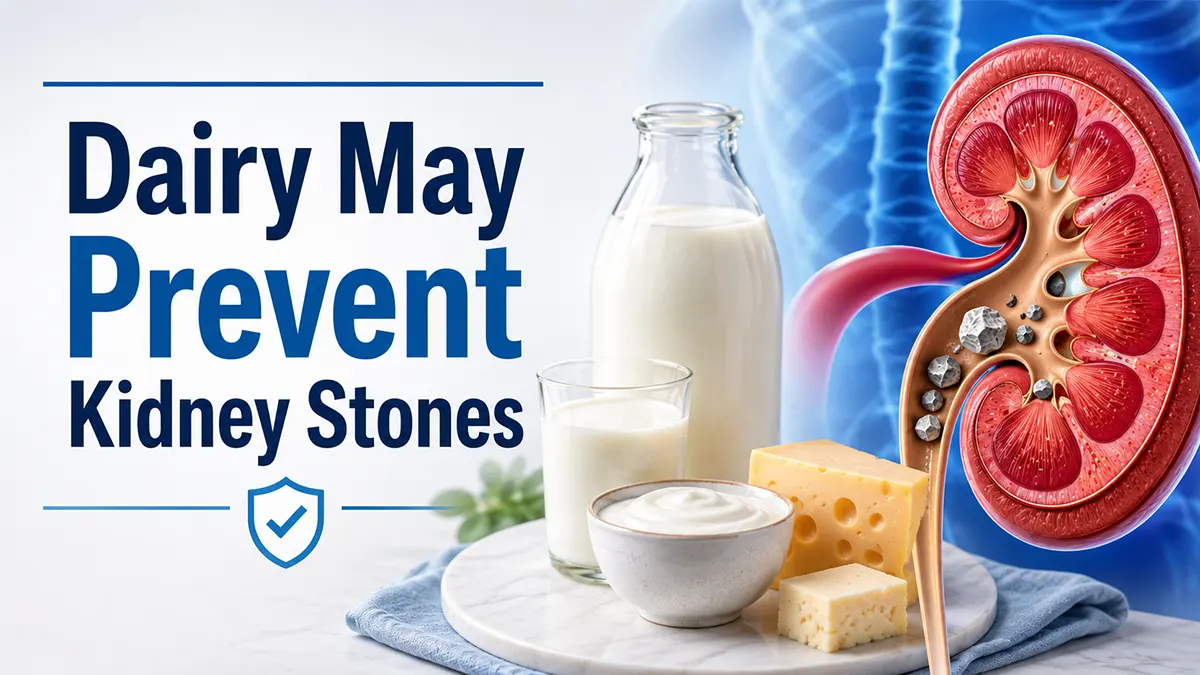
Kidney stones affect millions of people worldwide and can cause severe pain, discomfort, and recurring health issues. Among the many dietary myths surrounding kidney stone prevention, one of the most persistent is the belief that avoiding dairy products will reduce the risk of stone formation. This assumption seems logical because many kidney stones contain calcium. However, modern nutritional science reveals a surprising contradiction: reducing dairy intake may actually increase your chances of developing certain types of kidney stones.
This phenomenon is often referred to as The Paradox of Calcium: Why You Shouldn’t Stop Dairy to Prevent Stones. Understanding this paradox can help people make better dietary choices and protect both kidney and bone health.
Table of Contents
Understanding Kidney Stones
What Are Kidney Stones?
Kidney stones are hard mineral deposits that form inside the kidneys. They develop when certain substances in urine become concentrated enough to crystallize and stick together.
These stones can vary in size from tiny grains to larger masses capable of blocking the urinary tract. Symptoms often include:
- Severe back or side pain
- Blood in the urine
- Nausea and vomiting
- Frequent urination
- Pain during urination
Common Types of Kidney Stones
There are several types of kidney stones, including:
| Stone Type | Main Composition |
|---|---|
| Calcium Oxalate | Calcium and oxalate |
| Calcium Phosphate | Calcium and phosphate |
| Uric Acid | Uric acid crystals |
| Struvite | Infection-related minerals |
| Cystine | Genetic amino acid disorder |
Approximately 80% of kidney stones contain calcium, which has contributed to the misconception that dietary calcium is harmful.
Calcium Oxalate Kidney Stones – Causes & Prevention (2026 US Guide)
The Widespread Myth About Dairy and Stones
Why Many People Avoid Dairy
After experiencing a kidney stone, many individuals immediately assume that consuming calcium-rich foods caused the problem. Since milk, cheese, and yogurt contain calcium, they are often the first foods removed from the diet.
Unfortunately, this reaction is based on an incomplete understanding of how kidney stones form.
How the Misconception Started
The confusion stems from the fact that calcium is present in many stones. People naturally conclude that consuming less calcium should reduce stone formation.
However, the calcium found in stones does not necessarily come directly from dairy products. The body’s metabolism is far more complex, and dietary calcium often serves a protective function rather than a harmful one.
The Essential Role of Calcium in the Human Body
Bone Health and Structural Support
Calcium is the most abundant mineral in the human body. Nearly 99% of it is stored in bones and teeth.
Adequate calcium intake helps:
- Maintain bone density
- Prevent osteoporosis
- Support healthy growth
- Reduce fracture risk
Muscle, Nerve, and Heart Functions
Beyond bones, calcium plays critical roles in:
- Muscle contractions
- Nerve signal transmission
- Blood clotting
- Heart rhythm regulation
- Hormone release
Removing dairy without proper nutritional replacement can lead to calcium deficiencies that affect overall health.
Uric Acid Kidney Stones – Symptoms & Diet (2026 USA Guide)
The Calcium-Stone Connection Explained
Why Calcium Is Often Blamed
Because calcium oxalate stones are the most common type, calcium often receives the blame. Yet researchers have discovered that dietary calcium and urinary calcium behave differently.
The source and timing of calcium consumption matter significantly.
The Difference Between Dietary Calcium and Stone Calcium
Dietary calcium obtained from food often protects against stones. In contrast, excess calcium excreted into urine due to metabolic factors may contribute to stone formation.
This distinction is crucial. Simply reducing dairy intake does not automatically lower urinary calcium levels and may create additional risks.
The Science Behind the Paradox
How Dietary Calcium Reduces Stone Risk
The paradox lies in how calcium functions within the digestive system.
When calcium is consumed alongside meals, it binds to oxalate molecules in the intestines. This creates compounds that are excreted through stool rather than absorbed into the bloodstream.
As a result:
- Less oxalate enters circulation
- Less oxalate reaches the kidneys
- Stone risk decreases
Calcium and Oxalate Binding Mechanisms
Think of calcium as a protective partner.
Without enough dietary calcium:
- Oxalates remain unbound.
- More oxalates are absorbed.
- Oxalate levels in urine rise.
- Stone formation becomes more likely.
Ironically, eliminating dairy may increase the very substance responsible for many kidney stones.
How Do Kidney Stones Form? Step-by-Step Medical Explanation (2026 Guide)
Understanding Oxalates
Foods High in Oxalates
Oxalates are naturally occurring compounds found in many healthy foods, including:
- Spinach
- Beets
- Sweet potatoes
- Almonds
- Rhubarb
- Dark chocolate
- Tea
These foods are nutritious, but excessive oxalate absorption can contribute to stone formation.
Oxalates and Kidney Stone Formation
When oxalates combine with calcium inside the kidneys instead of the intestines, calcium oxalate crystals can develop.
This is why balanced calcium intake is so important. The goal is to encourage calcium-oxalate binding before absorption occurs.
Kidney Stone Symptoms at Different Ages (2026 Guide: What Changes With Age?)
Why Stopping Dairy Can Increase Stone Risk
Reduced Calcium Intake and Oxalate Absorption
People who stop consuming dairy often experience lower calcium intake overall.
This reduction allows more oxalates to pass through the digestive tract unbound.
Consequently:
- Oxalate absorption increases
- Urinary oxalate concentration rises
- Stone risk grows
Increased Urinary Oxalate Levels
Studies consistently show that low-calcium diets can lead to elevated urinary oxalate levels.
Even small increases in urinary oxalate can significantly increase the likelihood of stone formation because calcium oxalate crystals form easily under favorable conditions.
What Research Says About Dairy Consumption
Key Scientific Findings
Research over several decades has repeatedly challenged the low-calcium approach.
Scientists have found that:
- Normal dietary calcium intake reduces stone recurrence.
- Low-calcium diets may increase stone risk.
- Dairy products are generally safe for most stone-formers.
- Adequate calcium supports both kidney and bone health.
Long-Term Population Studies
Large observational studies have shown that individuals consuming recommended amounts of dietary calcium often have lower rates of kidney stones compared to those with restricted calcium intake.
Researchers now frequently recommend maintaining adequate dietary calcium rather than avoiding it.
Choosing the Right Dairy Products
Milk, Yogurt, and Cheese Benefits
Common dairy products offer valuable nutrients:
| Dairy Product | Benefits |
|---|---|
| Milk | Calcium, protein, vitamin D |
| Yogurt | Calcium and probiotics |
| Cheese | Concentrated calcium and protein |
Including these foods with meals may help maximize calcium’s protective effect against oxalate absorption.
Portion Control and Balanced Nutrition
Balance remains important.
Recommended approaches include:
- Consuming dairy with meals
- Avoiding excessive calorie intake
- Maintaining a varied diet
- Following healthcare provider guidance
Moderation is usually more effective than complete elimination.
Calcium Supplements vs. Dietary Calcium
Important Differences
Dietary calcium and calcium supplements are not always equivalent.
Calcium from food enters the digestive system alongside other nutrients, allowing effective oxalate binding.
When Supplements May Increase Risk
Certain studies suggest calcium supplements taken between meals may increase stone risk because they may not effectively bind dietary oxalates.
For this reason:
- Food sources are often preferred.
- Supplements should be taken under medical supervision.
- Timing of supplementation matters.
Additional Strategies to Prevent Kidney Stones
Hydration and Fluid Intake
Hydration remains the most important prevention strategy.
Adequate fluid intake:
- Dilutes urine
- Reduces crystal formation
- Promotes urinary flow
Many experts recommend producing at least two liters of urine daily.
Reducing Excess Sodium
High sodium intake increases urinary calcium excretion.
To lower risk:
- Limit processed foods
- Read nutrition labels
- Reduce added salt
Moderating Animal Protein
Excessive animal protein may increase stone-forming compounds in urine.
Consider balancing protein intake with:
- Plant-based foods
- Fruits
- Vegetables
- Whole grains
Special Considerations for Different Individuals
People with Recurrent Stones
Individuals with repeated kidney stones should seek personalized medical evaluation.
Factors influencing stone risk include:
- Genetics
- Metabolic disorders
- Hydration habits
- Dietary patterns
Individuals with Lactose Intolerance
Those who cannot tolerate dairy still need adequate calcium.
Potential alternatives include:
- Lactose-free milk
- Fortified plant beverages
- Calcium-rich foods
- Medical guidance regarding supplementation
The objective is maintaining healthy calcium intake rather than eliminating calcium altogether.
Frequently Asked Questions
1. Does dairy directly cause kidney stones?
No. For most people, normal dairy consumption does not cause kidney stones and may actually reduce the risk of calcium oxalate stones.
2. Why do calcium stones contain calcium if calcium is protective?
Dietary calcium binds oxalates in the intestines. Problems arise when calcium and oxalate combine within the kidneys rather than the digestive tract.
3. Should people with kidney stones avoid milk?
Most stone-formers do not need to avoid milk. Healthcare providers often encourage adequate dietary calcium intake.
4. Are calcium supplements the same as dairy products?
Not necessarily. Dietary calcium often provides greater protective benefits because it interacts with oxalates during digestion.
5. Which dairy product is best for kidney stone prevention?
Milk, yogurt, and cheese can all contribute beneficial dietary calcium when consumed as part of a balanced diet.
6. Can a low-calcium diet increase kidney stone risk?
Yes. Low-calcium diets may increase oxalate absorption and elevate the risk of calcium oxalate stone formation.
7. What is the most effective way to prevent kidney stones?
Adequate hydration, balanced calcium intake, moderate sodium consumption, and personalized medical guidance are among the most effective strategies.
8. Are all kidney stones caused by calcium?
No. Kidney stones may also be composed of uric acid, struvite, cystine, or other substances.
Conclusion
The message behind The Paradox of Calcium: Why You Shouldn’t Stop Dairy to Prevent Stones is both surprising and scientifically important. Although many kidney stones contain calcium, eliminating dairy products is rarely the right solution. In fact, adequate dietary calcium often serves as a natural defense mechanism by binding oxalates in the digestive tract and reducing their absorption.
Modern research increasingly supports maintaining healthy calcium intake through food rather than restricting it. Milk, yogurt, and cheese can be valuable components of a kidney-stone prevention strategy when combined with proper hydration, sodium control, and balanced nutrition.
Instead of fearing dairy, individuals concerned about kidney stones should focus on understanding the complex relationship between calcium and oxalates. The evidence suggests that for many people, keeping calcium in the diet is not only safe but beneficial. The real paradox is that avoiding dairy to prevent stones may actually increase the risk of developing them.
For additional nutrition information, visit the National Institute of Diabetes and Digestive and Kidney Diseases.
Medical Review
Dr. Jayanth Reddy – Consultant Urologist
My Health Hospitals, Hyderabad
This content has been medically reviewed for accuracy, safety, and reliability based on current urology treatment guidelines and patient education standards.
According to the National Health Service kidney stone symptoms guidance, severe flank pain may worsen during rest or nighttime and should never be ignored if accompanied by fever, vomiting, or difficulty urinating.
Author
Yamanandan Reddy
Health Content Writer & Frontend Developer
Yamanandan Reddy is a health content writer and frontend developer with over 4 years of experience in website design and digital content creation. He writes research-based health articles to help readers understand symptoms, causes, treatments, and prevention methods related to common health conditions.
His articles are written using information from trusted medical sources such as the World Health Organization (WHO), Mayo Clinic, and the Centers for Disease Control and Prevention (CDC).
Sources
The information in this article is researched and verified using trusted medical resources, including:
• World Health Organization (WHO)
• Mayo Clinic
• National Institutes of Health (NIH)
• Centers for Disease Control and Prevention
⚠️ Medical Disclaimer
This content is for informational purposes only and does not replace professional medical advice. Always consult a qualified healthcare provider for diagnosis and treatment.