The Silent Threat Forming Inside You
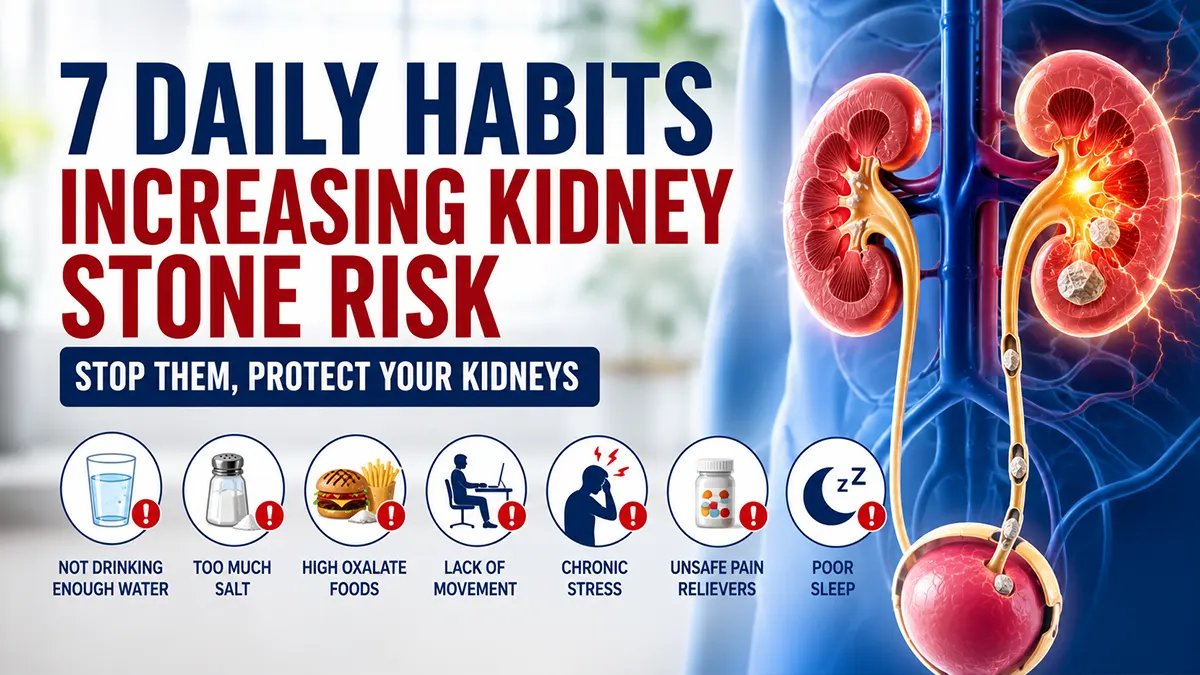
Certain daily habits that increase kidney stone risk are so ordinary, most people never suspect them. Most people never think about their kidneys — until a stone strikes…
And when it does, the pain is often described as one of the worst a human being can experience. What makes kidney stones especially unsettling is this: they don’t form overnight. They build up slowly, quietly, over months or years — often because of habits you repeat every single day without a second thought.
Here’s the sobering truth. 1 in 10 people will develop a kidney stone in their lifetime, according to the National Kidney Foundation. And a surprising number of those cases are completely preventable.
The good news? Small, informed changes to your daily routine can dramatically lower your risk. Let’s look at the 7 most common habits that are silently increasing your chances of developing kidney stones — and what you can do about each one.
Table of Contents
1. Not Drinking Enough Water Throughout the Day
This is the single biggest risk factor for kidney stones — and the most overlooked.
When you’re not drinking enough fluids, your urine becomes highly concentrated. Minerals and salts in your urine don’t get flushed out, and over time they crystallize into stones.
Most adults need at least 2.5 to 3 litres of water per day, and even more in hot climates like much of India. If your urine is dark yellow, you’re almost certainly not drinking enough.
These are the daily habits that increase kidney stone risk most doctors warn about
Quick fix: Aim for pale, straw-coloured urine. Carry a water bottle everywhere and set hourly reminders if needed.
Read Also : best water for kidney stones prevention
2. Eating Too Much Salt (Sodium)
That extra pinch of salt — in your pickles, processed foods, restaurant meals, and packaged snacks — may be quietly setting the stage for a stone.
High sodium intake raises the level of calcium in your urine. Excess urinary calcium bonds with oxalate or phosphate in the kidneys, forming the most common type of kidney stone: calcium oxalate or calcium phosphate stones.
Research published in the Journal of Urology consistently links high-sodium diets to increased stone recurrence.
Quick fix: Limit sodium to under 2,300 mg per day. Cook fresh meals at home, and read food labels carefully.
3. Eating a High Animal Protein Diet
High-protein diets are trendy — but loading up on red meat, poultry, eggs, and seafood every single day has a hidden downside for your kidneys.
Animal proteins are rich in purines, which break down into uric acid in your body. High uric acid levels can trigger uric acid kidney stones. Additionally, animal protein increases urinary calcium and reduces citrate — a natural compound that actually prevents stone formation.
Excess animal protein is a well-documented daily habit that increases kidney stone risk, especially for those prone to uric acid stones.
Quick fix: Balance animal protein with plant-based proteins like lentils, legumes, and tofu. You don’t need to go fully vegetarian — just moderate your portions.
4. Taking High-Dose Vitamin C Supplements
Vitamin C is great for immunity. But mega-dosing on Vitamin C supplements (above 1,000 mg per day) is a habit that quietly raises kidney stone risk.
Here’s why: your body converts excess Vitamin C into oxalate. More oxalate in your urine means a higher chance of calcium oxalate stones — the most common type.
A large study in JAMA Internal Medicine found that men who took high-dose Vitamin C supplements had twice the risk of kidney stones compared to those who didn’t.
Quick fix: Get your Vitamin C from whole foods like citrus fruits, amla, and bell peppers. If you supplement, keep it at or below 500 mg daily unless a doctor advises otherwise.
5. Eating Oxalate-Rich Foods Without Pairing Them With Calcium
Spinach smoothies. Dark chocolate. Beets. Nuts. These are all labelled “superfoods” — and they are nutritious. But they’re also very high in oxalates.
Oxalate isn’t harmful on its own. The problem arises when oxalate is absorbed into your bloodstream and travels to your kidneys unbound. When you eat calcium alongside oxalate-rich foods, the two bind together in your gut and are excreted harmlessly through stool — never reaching the kidneys.
But when you eat oxalates without calcium? They head straight to the kidneys, where they can crystallize.
Eating high-oxalate foods without calcium pairing is a daily habit that quietly increases kidney stone risk in otherwise health-conscious people.
Quick fix: Don’t avoid oxalate foods — just pair them with a calcium source. Add yogurt to your smoothie. Have cheese with your salad. Timing matters.
6. Drinking Too Much Cola and Sugary Beverages
Reaching for a cold soda instead of water might feel refreshing — but it’s one of the most underrated kidney stone habits.
Dark colas contain phosphoric acid, which acidifies urine and promotes the formation of calcium oxalate and uric acid stones. Beyond that, sugary drinks cause metabolic changes that increase urinary calcium and uric acid levels.
A Harvard study found that people who drank one or more sugary drinks per day had a significantly higher kidney stone risk than those who drank water or coffee.
Quick fix: Replace soda with water, coconut water, or diluted lemon water. Lemon water is especially beneficial — its citric acid actively inhibits stone formation.
7. Living a Sedentary Lifestyle
Sitting at a desk all day, minimal movement, skipping exercise — these habits do more kidney damage than most people realise.
Physical inactivity promotes obesity and insulin resistance, both of which are linked to higher uric acid levels and increased urinary calcium excretion. Studies show that sedentary individuals are significantly more likely to develop kidney stones than those who exercise regularly.
Exercise also promotes better hydration habits and reduces the risk of metabolic syndrome — a cluster of conditions strongly associated with kidney stone formation.
Quick fix: Aim for at least 30 minutes of moderate movement daily. Even brisk walking counts. Your kidneys will thank you.
Simple Lifestyle Tweaks to Protect Your Kidneys Starting Today
You don’t need a dramatic overhaul. Small, consistent changes make all the difference:
- Drink water first thing in the morning — before coffee, before your phone.
- Season food with herbs, lemon, or spices instead of excess salt.
- Include a calcium source (dairy or fortified alternatives) with every oxalate-rich meal.
- Swap one animal protein meal per day with a plant-based option.
- Replace soda with lemon water or plain water as your default drink.
- Add a 20–30 minute walk to your daily routine.
- Talk to your doctor before starting any high-dose supplement regimen.
Consistency beats perfection. Even three or four of these changes, practised daily, can meaningfully lower your lifetime kidney stone risk.
Frequently Asked Questions (FAQs)
Q1: What is the fastest way to prevent kidney stones naturally?
The most effective and immediate step is to drink more water — at least 2.5 to 3 litres per day. Staying well-hydrated dilutes the urine and prevents minerals from crystallizing. Reducing sodium and animal protein intake are the next most impactful changes.
Q2: Can diet alone really prevent kidney stones?
Yes, for the majority of people. Studies show that dietary modifications — especially adequate hydration, reduced sodium, and balanced oxalate-calcium intake — can significantly reduce stone formation. However, some individuals may have genetic factors that require medical management alongside dietary changes.
Q3: Are kidney stones more common in India and hot climates?
Yes. India has a notably high prevalence of kidney stones, particularly in the “stone belt” regions of Rajasthan, Gujarat, Maharashtra, and parts of South India. Hot weather increases sweating and reduces urine output, making concentrated urine — and therefore stones — more likely. This makes hydration especially critical for people living in warmer climates.
Dr. Jayanth Reddy – Consultant Urologist
My Health Hospitals, Hyderabad
This content has been medically reviewed for accuracy and reliability based on current urology treatment guidelines.
According to the kidney stone symptoms NHS guide, severe flank pain can worsen during rest or nighttime.
Author
Yamanandan Reddy
Health Content Writer & Frontend Developer
Yamanandan Reddy is a health content writer and frontend developer with over 4 years of experience in website design and digital content creation. He writes research-based health articles to help readers understand symptoms, causes, treatments, and prevention methods related to common health conditions.
His articles are written using information from trusted medical sources such as the World Health Organization (WHO), Mayo Clinic, and the Centers for Disease Control and Prevention (CDC).
Sources
The information in this article is researched and verified using trusted medical resources, including:
• World Health Organization (WHO)
• Mayo Clinic
• National Institutes of Health (NIH)
• Centers for Disease Control and Prevention
⚠️ Medical Disclaimer
This content is for informational purposes only and does not replace professional medical advice. Always consult a qualified healthcare provider for diagnosis and treatment.
1 thought on “7 Daily Habits That Quietly Increase Kidney Stone Risk”