
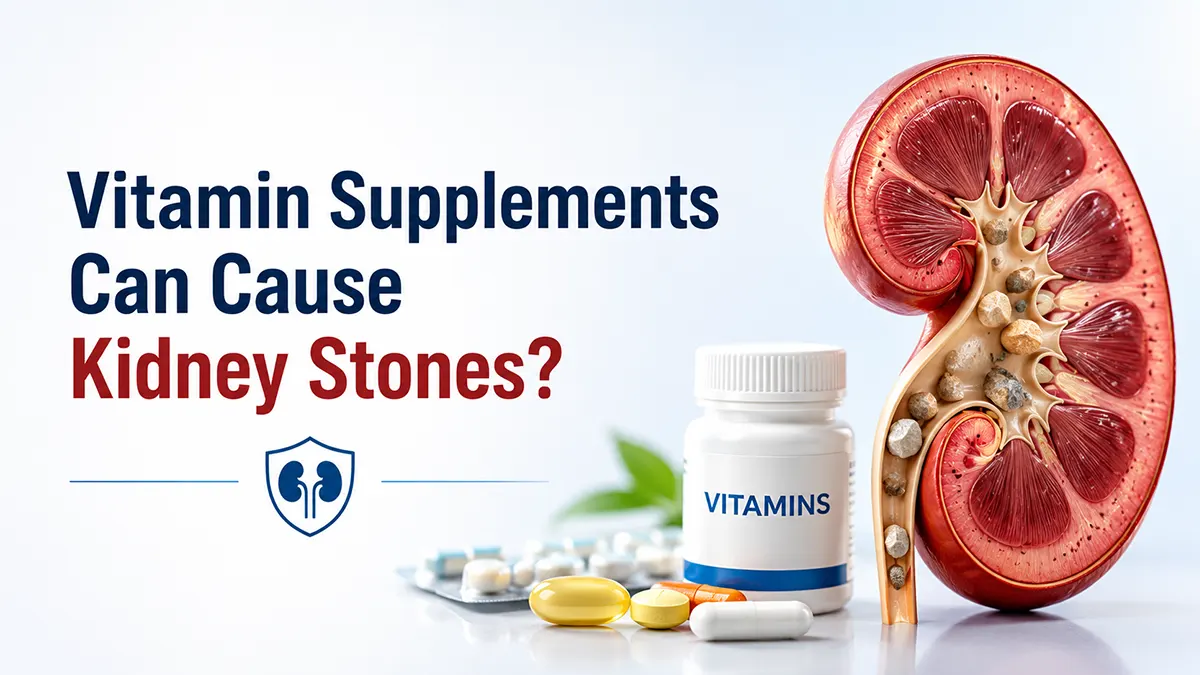
Can Vitamin Supplements Cause Kidney Stones? Yes, some vitamin supplements can increase your risk of kidney stones—especially high doses of vitamin C, calcium, and vitamin D. But not all supplements are harmful. In fact, some vitamins, such as vitamin B6, may help reduce stone formation.
If you recently started taking Limcee 500, Zincovit, Supradyn, Shelcal 500, Emergen-C, Airborne, Berocca, or gym multivitamins and now have flank pain or burning urination, you may be wondering if your supplements are to blame.
This 2026 guide explains what doctors know about vitamin supplements and kidney stone risk, which products are safer, and when you should seek medical care.
Table of Contents
What Are Kidney Stones?
Kidney stones are hard crystals that form when minerals and salts build up in the urine. The most common type is calcium oxalate stones.
Common triggers include:
- Dehydration
- High salt intake
- Excess vitamin C
- Too much calcium supplementation
- High-dose vitamin D
- Family history
- Certain medical conditions
If you develop severe side pain, blood in urine, or nausea, these may be early Kidney Stones symptoms.
Can Vitamin Supplements Cause Kidney Stones?
Yes—Certain Supplements Can Increase Risk
Supplements are useful when taken correctly, but high doses can overwhelm your kidneys.
The biggest concerns include:
- Vitamin C → Converts to oxalate
- Vitamin D → Increases calcium absorption
- Calcium supplements → Can raise urine calcium
- Zinc (excess) → May indirectly contribute
- Protein/gym supplements → Increase calcium excretion
Vitamin C can increase oxalate levels, especially when combined with a diet rich in foods high in oxalates.
Why Does Excess Vitamin C Turn Into Oxalate?
When you take high doses of vitamin C, your body metabolizes part of it into oxalate.
Oxalate can bind with calcium in the urine and form kidney stones.
How Much Vitamin C Is Too Much for Kidneys?
Most experts recommend staying below 1,000 mg per day if you have a history of kidney stones.
Risk increases with:
- 1,000–2,000 mg daily
- Long-term use
- Low water intake
Can Taking 1000 mg of Vitamin C a Day Cause Kidney Stones?
Yes, it can increase the risk, especially if you:
- Have had calcium oxalate stones before
- Drink less water
- Eat a high-oxalate diet
- Take additional vitamin C from gummies or powders
Products that may contribute:
- Limcee 500
- Emergen-C
- Airborne
- Berocca
- Effervescent vitamin C tablets
Read Also : kidney stone treatment options
Does Drinking Emergen-C Every Day Cause Kidney Stones?
Potentially, yes.
Emergen-C often contains:
- 1,000 mg vitamin C
- Additional minerals
Daily use may increase stone risk in susceptible individuals.
Can Airborne Tablets Give You Kidney Stones?
Airborne contains high-dose vitamin C and minerals. Occasional use is usually safe, but daily use may increase oxalate levels.
Are Berocca Tablets Safe for Kidney Stone Sufferers?
Berocca contains vitamin C and B vitamins.
Usually safe in moderation, but people with recurrent stones should avoid excessive use and stay well hydrated.
Can Daily Supradyn or Zincovit Cause Kidney Stones?
Supradyn and Zincovit are generally safe at standard doses.
However, risk rises if you:
- Take multiple supplements together
- Have low fluid intake
- Already form stones
Side Effects of Limcee 500 on Kidneys
Limcee 500 usually contains 500 mg vitamin C.
Occasional use is unlikely to cause stones, but daily use combined with other vitamin C products may increase oxalate production.
Can Shelcal 500 Cause Kidney Stones if Taken Daily?
Shelcal 500 contains calcium and vitamin D.
It may increase stone risk if:
- Taken without meals
- Used in high doses
- Combined with low water intake
Does Taking Vitamin D3 and K2 Cause Kidney Stones?
Vitamin D3 can increase calcium absorption. K2 may help direct calcium into bones, but it does not eliminate stone risk.
If you have a history of calcium stones, discuss your vitamin D dose with your doctor.
NHS Guidelines on Vitamin D and Kidney Stones
The National Health Service recommends vitamin D when indicated, but people with kidney stones should avoid unnecessary high doses and monitor calcium levels.
Can Gummy Multivitamins Cause Kidney Stones?
Yes, if they contain:
- High vitamin C
- Calcium
- Vitamin D
Examples include calcium gummies and immune-support gummies.
Do Calcium Gummies Increase Kidney Stone Risk?
They can, especially when taken:
- In high doses
- Without meals
- Without enough water
Calcium Citrate vs Calcium Carbonate for Kidney Stones
| Feature | Calcium Citrate | Calcium Carbonate |
|---|---|---|
| Stone risk | Lower | Slightly higher |
| Best for stone formers | Yes | Use cautiously |
| Absorption | Better | Needs stomach acid |
| Take with meals | Helpful | Required |
| Added benefit | Citrate may reduce stones | No citrate benefit |
Calcium citrate is usually preferred for people with kidney stones.
Can B-Complex Vitamins Cause Kidney Stones or Dark Urine?
B-complex vitamins rarely cause stones.
Bright yellow urine is common due to riboflavin (B2) and is harmless.
Which Vitamins Help Prevent Stones?
Vitamin B6 may reduce oxalate production and may help prevent calcium oxalate stones.
Do Water-Soluble Vitamins Cause Kidney Stones?
Most water-soluble vitamins are excreted in urine.
However, very high doses of vitamin C are an exception because they can increase oxalate.
Can You Flush Out Excess Vitamins by Drinking More Water?
Drinking water helps dilute urine and reduces stone risk, but it does not completely offset very high supplement doses.
Can Taking Too Many Zinc and Vitamin C Supplements Cause Stones?
Yes. Combining multiple products can significantly increase your daily intake and raise stone risk.
Do Gym Multivitamin Capsules Cause Kidney Stones?
Some bodybuilding supplements contain:
- Vitamin C
- Vitamin D
- Calcium
- Creatine
- Protein concentrates
Risk increases when athletes become dehydrated.
Can Multivitamin Tablets Cause Kidney Pain?
Multivitamins themselves usually do not cause pain, but they may contribute to stone formation, which can cause severe flank pain.
Symptoms of Kidney Stones After Starting Vitamins
Watch for:
- Sharp pain in the back or side
- Burning while urinating
- Blood in urine
- Nausea or vomiting
- Frequent urination
- Cloudy urine
Urgent Care for Flank Pain After Taking New Vitamins
Seek urgent medical care if you have:
- Severe flank pain
- Fever or chills
- Vomiting
- Blood in urine
- Inability to urinate
Treatment for Supplement-Related Kidney Stones
Treatment depends on stone size.
Small Stones
- Drink plenty of water
- Pain relievers
- Alpha-blockers
Larger Stones
- Shock wave therapy
- Ureteroscopy
- Laser stone removal
Best Kidney Stone Safe Multivitamin for Men and Women
Look for products with:
- Vitamin C under 200–500 mg
- Moderate vitamin D
- No excess calcium unless prescribed
- Added vitamin B6
- No megadoses
Ask your doctor for personalized recommendations.
When Should You Stop Taking Supplements?
Talk to your doctor if you have:
- Recurrent stones
- Chronic kidney disease
- Elevated calcium levels
- New urinary symptoms
Do not stop prescribed supplements without medical advice.
Real-Life Example
A 38-year-old man began taking daily Emergen-C, gym multivitamins, and vitamin D. After a month, he developed severe flank pain. Testing showed a 5 mm calcium oxalate stone. His total vitamin C intake exceeded 2,000 mg daily, and he drank little water.
Frequently Asked Questions
Can vitamin supplements cause kidney stones?
Yes. High doses of vitamin C, calcium, and vitamin D may increase stone risk.
Is 1000 mg vitamin C too much?
For people with prior kidney stones, it may be too high.
Should I stop vitamin D if I had calcium stones?
Not necessarily, but your dose should be monitored by your doctor.
Are gummy vitamins safer?
No. Gummies can still contain high vitamin C and calcium.
Which vitamin helps prevent kidney stones?
Vitamin B6 may help reduce oxalate production.
Related Articles
- Kidney Stone Symptoms You Should Never Ignore
- Foods High in Oxalates to Avoid
- How Much Water Should You Drink to Prevent Stones?
Conclusion
Can vitamin supplements cause kidney stones? Yes—especially when taken in high doses without enough water.
The most common culprits are:
- Vitamin C
- Calcium supplements
- Vitamin D
- Multiple overlapping multivitamins
If you have a history of stones, choose supplements carefully and discuss them with your doctor.
Experiencing flank pain or blood in urine after starting a new supplement? See a healthcare professional promptly.
Dr. Jayanth Reddy – Consultant Urologist
My Health Hospitals, Hyderabad
This content has been medically reviewed for accuracy and reliability based on current urology treatment guidelines.
According to the kidney stone symptoms NHS guide, severe flank pain can worsen during rest or nighttime.
Author
Yamanandan Reddy
Health Content Writer & Frontend Developer
Yamanandan Reddy is a health content writer and frontend developer with over 4 years of experience in website design and digital content creation. He writes research-based health articles to help readers understand symptoms, causes, treatments, and prevention methods related to common health conditions.
His articles are written using information from trusted medical sources such as the World Health Organization (WHO), Mayo Clinic, and the Centers for Disease Control and Prevention (CDC).
Sources
The information in this article is researched and verified using trusted medical resources, including:
• World Health Organization (WHO)
• Mayo Clinic
• National Institutes of Health (NIH)
• Centers for Disease Control and Prevention
⚠️ Medical Disclaimer
This content is for informational purposes only and does not replace professional medical advice. Always consult a qualified healthcare provider for diagnosis and treatment.