
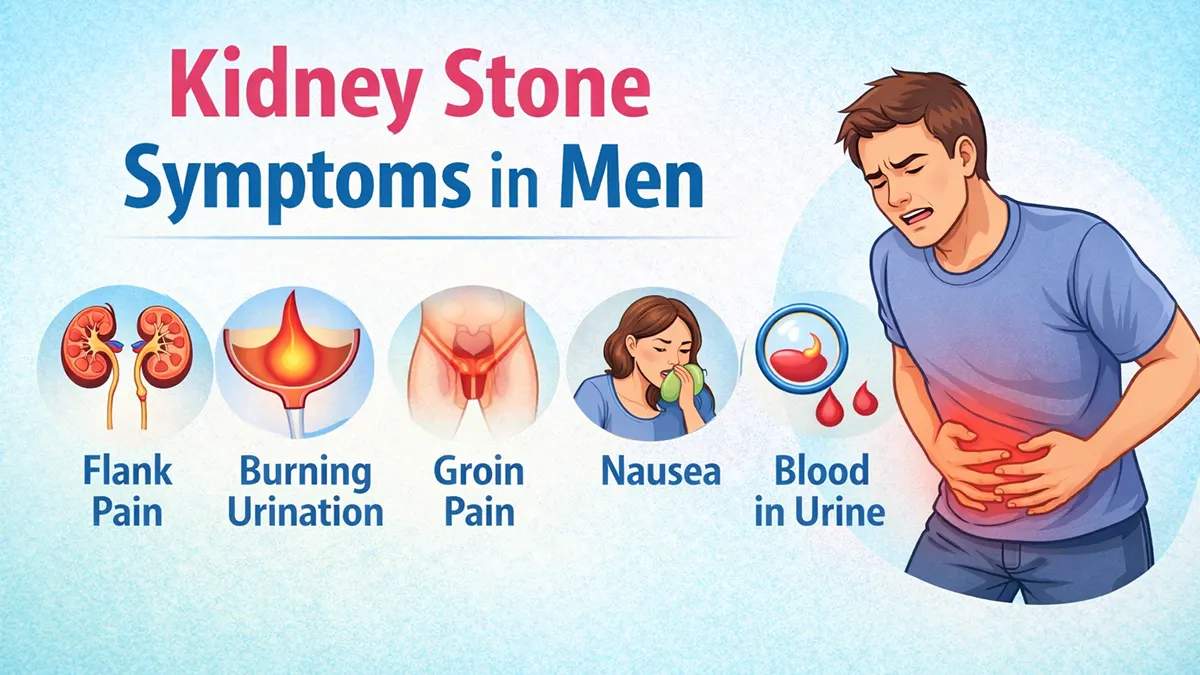
Many men ignore early warning signs because the pain may initially feel like muscle strain or digestive discomfort. Doctors recognize kidney stone symptoms in men early, which helps prevent serious complications such as infection or urinary blockage.
Kidney stones are a painful and increasingly common urinary condition that affects millions of men worldwide. These hard mineral deposits form when substances such as calcium, oxalate, or uric acid crystallize inside the kidneys due to dehydration, dietary habits, or metabolic factors. Understanding kidney stone symptoms in men is essential because early detection can help prevent severe complications, including urinary blockage and kidney damage.
Many men initially ignore early symptoms, assuming the discomfort is due to muscle strain, digestive issues, or temporary dehydration. However, recognizing the early warning signs of kidney stones can lead to faster diagnosis and effective treatment.
Table of Contents
Early Kidney Stone Symptoms in Men
Kidney stone symptoms often begin subtly and gradually intensify as the stone moves through the urinary tract. The earliest signs may appear as mild discomfort in the lower back or side.
Common early symptoms include:
- Dull or sharp pain in the lower back or flank
- Burning sensation during urination
- Frequent urge to urinate
- Passing small amounts of urine
- Cloudy or foul-smelling urine
- Mild nausea or stomach discomfort
- Blood in urine (pink, red, or brown urine)
Doctors recognize kidney stone symptoms in men early because timely treatment can prevent complications such as infection or urinary obstruction.
Where Do Men Feel Kidney Stone Pain?
Pain location varies depending on the stone’s size and movement. In men, kidney stone pain commonly radiates from the lower back to the groin.
Typical pain areas include:
- Flank (side of the lower back)
- Lower abdomen
- Groin or testicular region
- Pain during urination
Pain may occur in waves, often described as one of the most severe types of pain experienced.
✔ Kidney Stone Pain Location Chart
Severe Kidney Stone Symptoms in Men
As kidney stones grow or obstruct urine flow, symptoms can become intense and debilitating.
Severe warning signs include:
- Intense, wave-like back or abdominal pain
- Persistent nausea and vomiting
- Fever and chills (sign of infection)
- Difficulty passing urine
- Severe restlessness due to pain
- Blood in urine
Severe kidney stone symptoms in men require immediate medical attention to avoid kidney damage.
Kidney Stone Symptoms vs Urinary Tract Infection in Men
Although UTIs are less common in men, kidney stone symptoms can sometimes mimic infection.
Key differences:
- Kidney stone pain is sharp and sudden
- UTI symptoms mainly involve burning urination and mild discomfort
- Kidney stones often cause radiating flank pain
- UTIs may cause urinary urgency and fever
Proper diagnostic imaging helps distinguish between these conditions.
Risk Factors for Kidney Stones in Men
Men are generally at higher risk of kidney stones due to lifestyle and dietary factors.
Common risk factors include:
- Dehydration or low fluid intake
- High-protein or high-sodium diet
- Obesity and sedentary lifestyle
- Family history of kidney stones
- Excessive consumption of sugary beverages
- Certain metabolic disorders
Understanding kidney stone symptoms in men helps ensure early diagnosis and preventive care.
Emotional and Physical Impact of Kidney Stones
Kidney stones can significantly affect a man’s daily life. Severe pain may disrupt work, sleep, and routine activities. The fear of recurring stones can also lead to anxiety and stress.
Adopting preventive strategies and seeking early treatment can improve long-term kidney health and quality of life.
When Should Men See a Doctor?
Men should seek medical attention if they experience:
- Severe or persistent flank pain
- Blood in urine
- Fever with urinary symptoms
- Difficulty urinating
- Recurrent kidney stone episodes
Early medical care reduces the risk of complications such as kidney infection or chronic kidney disease.
✔ Kidney Stone Treatment Without Surgery
Prevention Tips for Men
Preventing kidney stones involves simple but effective lifestyle changes.
- Drink at least 2.5–3 liters of water daily
- Limit excessive salt intake
- Reduce animal protein consumption
- Maintain healthy body weight
- Include citrus fruits in diet
- Follow medical advice if stones recur
✔ Foods That Cause Kidney Stones
Frequently Asked Questions (FAQs)
What are the earliest kidney stone symptoms in men?
The earliest kidney stone symptoms in men often include mild flank pain, burning sensation during urination, frequent urination, nausea, and cloudy urine. These symptoms may start gradually before severe pain develops.
How does kidney stone pain feel in men?
Kidney stone pain in men is typically sharp, intense, and wave-like. It often begins in the lower back or side and may radiate toward the lower abdomen, groin, or testicles as the stone moves.
Can kidney stones cause testicular pain in men?
Yes, kidney stones can cause referred pain in the groin or testicular region. This occurs when the stone moves down the ureter, affecting nearby nerves that transmit pain signals.
How long do kidney stone symptoms last in men?
Kidney stone symptoms can last from a few days to several weeks depending on the size and location of the stone. Small stones may pass naturally, while larger stones require medical treatment.
Can kidney stone symptoms come and go in men?
Yes, kidney stone pain often occurs in waves and may come and go as the stone moves through the urinary tract. Periods of relief may be followed by sudden severe pain.
Do kidney stones cause frequent urination in men?
Kidney stones can irritate the urinary tract, leading to frequent urination or the urge to urinate even when little urine is passed.
What are severe kidney stone symptoms men should not ignore?
Severe symptoms include intense flank pain, blood in urine, fever, vomiting, difficulty urinating, and persistent nausea. These signs require immediate medical attention.
When should men go to the emergency room for kidney stones?
Men should seek emergency care if they experience unbearable pain, high fever, inability to urinate, or signs of infection such as chills and severe vomiting.
Can dehydration cause kidney stone symptoms in men?
Yes, dehydration is one of the leading causes of kidney stones. Low fluid intake increases mineral concentration in urine, leading to stone formation and related symptoms.
Are kidney stone symptoms worse at night in men?
Kidney stone pain may worsen at night due to reduced fluid intake, changes in body position, and increased sensitivity to pain during rest.
Conclusion
Kidney stone symptoms in men can range from mild discomfort to severe, debilitating pain depending on the stone’s size and location. Early recognition of symptoms is essential for timely treatment and prevention of complications. By adopting healthy lifestyle habits and staying hydrated, men can significantly reduce their risk of kidney stone recurrence and maintain optimal urinary health.
For medically reviewed information, refer to the National Kidney Foundation which provides expert guidance on kidney stone symptoms and treatment.
Medically Reviewed By:
Dr. Jayanth Reddy – Consultant Urologist
My Health Hospitals, Hyderabad
This content has been medically reviewed for accuracy and reliability based on current urology treatment guidelines.
Author
Yamanandan Reddy
Health Content Writer & Frontend Developer
Yamanandan Reddy is a health content writer and frontend developer with over 4 years of experience in website design and digital content creation. He writes research-based health articles to help readers understand symptoms, causes, treatments, and prevention methods related to common health conditions.
His articles are written using information from trusted medical sources such as the World Health Organization (WHO), Mayo Clinic, and the Centers for Disease Control and Prevention (CDC).
Sources
The information in this article is researched and verified using trusted medical resources, including:
• World Health Organization (WHO)
• Mayo Clinic
• National Institutes of Health (NIH)
• Centers for Disease Control and Prevention (CDC)
Disclaimer
The information provided on HealthyWayCare.com is for educational and informational purposes only. It should not be considered medical advice, diagnosis, or treatment. Always consult a qualified healthcare professional before making any medical decisions or starting any treatment.
3 thoughts on “Kidney Stone Symptoms in Men – Early Warning Signs You Should Never Ignore”