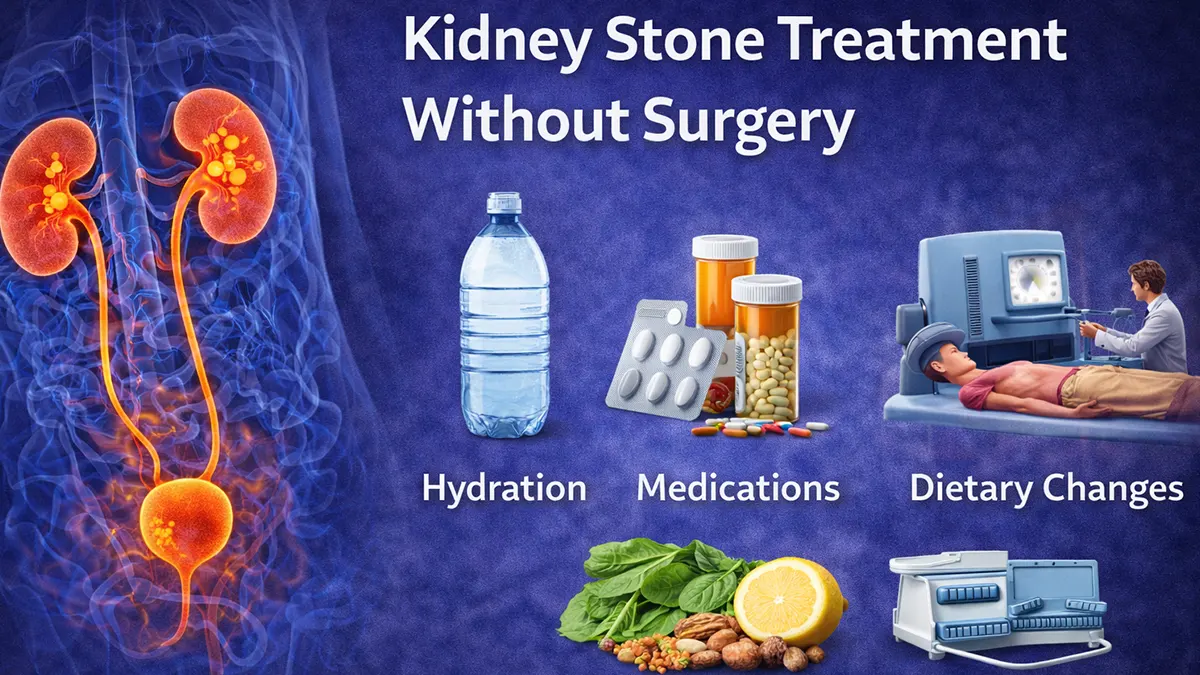
Kidney stone treatment without surgery is possible for many patients with small or medium stones. Medical therapy, hydration, and lifestyle changes help stones pass naturally and prevent complications.
Kidney stones are painful mineral deposits that form in the kidneys due to the accumulation of salts and minerals in urine. While some cases require surgical intervention, many kidney stones can be treated without surgery using medical and lifestyle-based approaches. Understanding non-surgical kidney stone treatment options helps patients manage symptoms, avoid complications, and recover faster.
Non-surgical treatments are usually recommended for small to medium-sized stones that can pass naturally through the urinary tract. Early diagnosis and proper medical guidance are essential for successful treatment.
Table of Contents
When Is Non-Surgical Kidney Stone Treatment Possible?
Doctors usually recommend non-surgical treatment when:
- Kidney stones are small (typically less than 6 mm)
- There is no severe infection or blockage
- Kidney function is stable
- Pain can be managed with medication
- The stone is likely to pass naturally
In such cases, conservative treatment can effectively resolve the condition.
Doctors recommend kidney stone treatment without surgery for small stones.
Medical Treatment for Kidney Stones Without Surgery
Pain Management Medications
Pain caused by kidney stones can be intense. Doctors prescribe medications such as anti-inflammatory drugs or pain relievers to reduce discomfort during stone passage.
Alpha Blockers
Alpha blockers help relax the muscles of the ureter, making it easier for stones to pass through the urinary tract.
Antibiotics (If Infection Is Present)
If a urinary tract infection occurs along with kidney stones, antibiotics are prescribed to prevent complications.
Medical Expulsive Therapy (MET)
This approach combines medications and hydration to help the stone pass naturally. MET is commonly used for small stones located in the ureter.
Early diagnosis improves kidney stone treatment without surgery success.
Hydration Therapy
Drinking adequate water is one of the most effective non-surgical treatments for kidney stones. Increased fluid intake helps dilute urine and promotes stone passage.
Doctors often recommend drinking 2.5 to 3 liters of water daily to support natural stone elimination.
Hydration supports kidney stone treatment without surgery outcomes.
Dietary Changes to Treat Kidney Stones
Diet plays a crucial role in both treatment and prevention. Adjusting food intake can help reduce stone size and prevent recurrence.
Recommended dietary changes include:
- Limiting high-oxalate foods
- Reducing sodium intake
- Balancing calcium consumption
- Avoiding excessive animal protein
- Including citrus fruits for natural citrate
Proper nutrition supports kidney function and reduces stone formation risk.
Diet plays a major role in kidney stone treatment without surgery.
Natural Remedies That May Help
Some natural approaches can complement medical treatment, although they should not replace professional care.
Common supportive remedies include:
- Lemon water (rich in citrate)
- Coconut water
- Herbal teas
- Increased intake of fruits and vegetables
These methods help improve hydration and urinary health.
Shock Wave Therapy (Non-Invasive Procedure)
Extracorporeal Shock Wave Lithotripsy (ESWL) is a non-surgical procedure that uses sound waves to break kidney stones into smaller pieces, allowing them to pass naturally.
This method is often recommended when stones are too large to pass but do not require invasive surgery.
Lifestyle Changes for Faster Recovery
Adopting healthy habits can improve recovery and reduce recurrence risk.
- Stay physically active
- Maintain a healthy body weight
- Avoid dehydration
- Follow prescribed medications
- Monitor urinary symptoms
Lifestyle modification is essential for long-term kidney health.
When Non-Surgical Treatment Is Not Enough
Surgical intervention may be required if:
- Stones are very large
- Severe infection develops
- Urinary blockage occurs
- Kidney damage risk increases
- Symptoms persist despite treatment
Timely medical evaluation ensures the most appropriate treatment plan.
Many patients prefer kidney stone treatment without surgery.
✔ Foods That Cause Kidney Stones
Conclusion
Kidney stone treatment without surgery is possible in many cases, especially when stones are small and detected early. Medical therapy, hydration, dietary changes, and non-invasive procedures like shock wave therapy can effectively manage the condition. Seeking timely medical care and adopting preventive lifestyle habits are key to ensuring faster recovery and long-term kidney health.
FAQs
Can kidney stones be treated without surgery?
Yes, many small kidney stones can be treated with medications, hydration, and dietary changes.
How long does it take to pass a kidney stone naturally?
It may take a few days to several weeks depending on the stone size.
Is drinking water enough to treat kidney stones?
Hydration helps but may need to be combined with medical treatment.
What is the best non-surgical treatment for kidney stones?
Medical expulsive therapy and shock wave therapy are common options.
Can lifestyle changes prevent kidney stones?
Yes, proper diet and hydration significantly reduce recurrence risk.
For medically reviewed treatment guidelines, refer to the National Kidney Foundation which provides expert information on kidney stone management.
Medically Reviewed By:
Dr. Jayanth Reddy – Consultant Urologist
My Health Hospitals, Hyderabad
This content has been medically reviewed for accuracy and reliability based on current urology treatment guidelines.
Author
Yamanandan Reddy
Health Content Writer & Frontend Developer
Yamanandan Reddy is a health content writer and frontend developer with over 4 years of experience in website design and digital content creation. He writes research-based health articles to help readers understand symptoms, causes, treatments, and prevention methods related to common health conditions.
His articles are written using information from trusted medical sources such as the World Health Organization (WHO), Mayo Clinic, and the Centers for Disease Control and Prevention (CDC).
Sources
The information in this article is researched and verified using trusted medical resources, including:
• World Health Organization (WHO)
• Mayo Clinic
• National Institutes of Health (NIH)
• Centers for Disease Control and Prevention (CDC)
Disclaimer
The information provided on HealthyWayCare.com is for educational and informational purposes only. It should not be considered medical advice, diagnosis, or treatment. Always consult a qualified healthcare professional before making any medical decisions or starting any treatment.
7 thoughts on “Kidney Stone Treatment Without Surgery – Effective Non-Surgical Options”