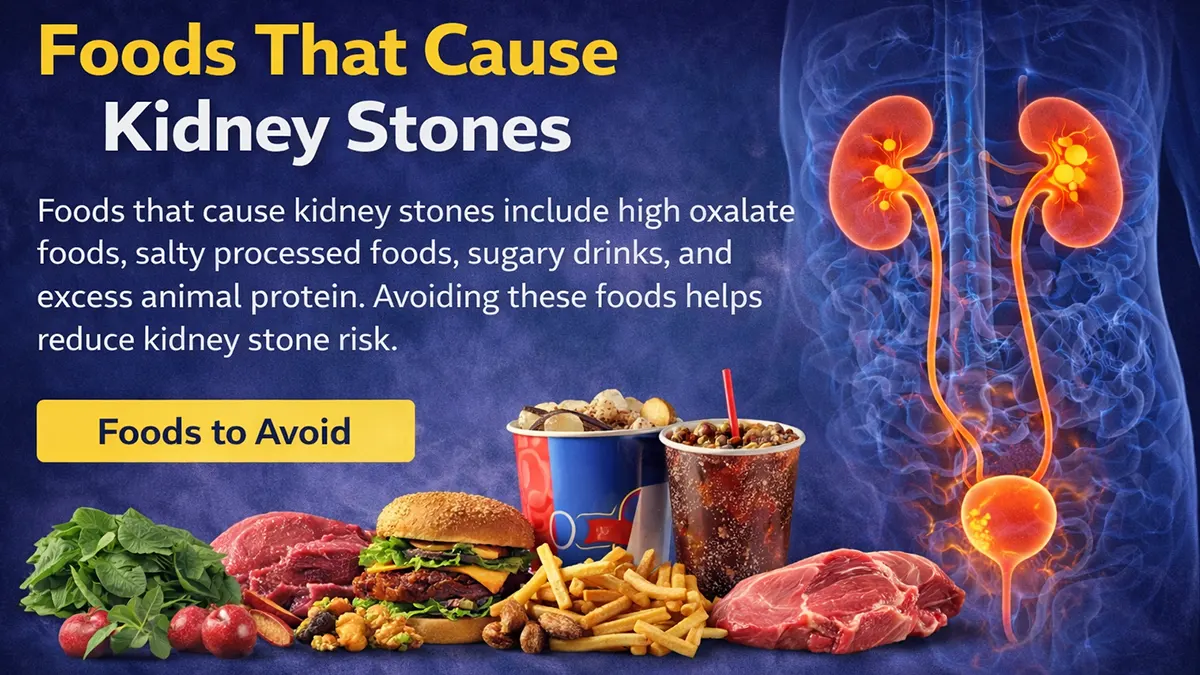
Foods that cause kidney stones can increase mineral buildup in the urinary tract. Understanding which foods to avoid helps reduce kidney stone risk and supports long-term kidney health.
Kidney stones are painful mineral deposits that form in the kidneys due to high levels of certain substances in urine. While hydration and lifestyle play a role, diet is one of the biggest factors influencing kidney stone formation. Understanding the foods that cause kidney stones can help reduce the risk of recurrence and protect long-term kidney health.
Certain foods increase oxalate, calcium, sodium, or uric acid levels in the body, which can contribute to stone formation. Identifying and limiting these foods is essential for prevention.
Table of Contents
Why Diet Matters in Kidney Stone Formation
Kidney stones develop when urine becomes concentrated with minerals that crystallize. Diet influences this process by affecting mineral balance, urine acidity, and hydration levels. High intake of sodium, oxalates, and animal protein significantly increases the risk.
Making informed dietary choices can help individuals avoid kidney stone triggers and maintain optimal kidney function.
High Oxalate Foods That Cause Kidney Stones
Oxalate is a natural compound found in many plant foods. When combined with calcium, it can form calcium oxalate stones, the most common type.
Foods High in Oxalate to Avoid
- Spinach
- Beetroot
- Sweet potatoes
- Nuts and nut butters
- Chocolate
- Tea
- Soy products
- Rhubarb
Reducing intake of these foods can lower the risk of stone formation, especially in individuals with a history of kidney stones.
Foods That Cause Kidney Stones – Comparison Table
Understanding foods that cause kidney stones becomes easier with this comparison chart.
| Food | Risk Level | Reason |
|---|---|---|
| Spinach | High | Very high oxalate content increases calcium oxalate stone risk |
| Beetroot | High | Raises oxalate levels in urine |
| Nuts | High | Contains concentrated oxalates |
| Chocolate | Moderate | Oxalates and sugar increase stone risk |
| Tea | Moderate | Contains oxalates that contribute to stone formation |
| Processed Foods | High | High sodium increases calcium excretion |
| Fast Food | High | Excess salt and unhealthy fats affect kidney function |
| Red Meat | Moderate | Increases uric acid levels |
| Organ Meats | High | Very high purine content leads to uric acid stones |
| Sugary Drinks | High | Raises calcium and insulin levels |
| Alcohol | Moderate | Causes dehydration and uric acid increase |
| Soy Products | Moderate | Contains oxalates affecting stone formation |
High Sodium Foods That Increase Kidney Stone Risk
Excess sodium increases calcium excretion in urine, promoting stone formation.
Salty Foods to Limit
- Processed foods
- Packaged snacks
- Fast food
- Canned soups
- Pickles
- Instant noodles
Limiting sodium intake helps maintain proper calcium balance and reduces kidney stress.
✔ Kidney Stone Symptoms article
Animal Protein and Kidney Stones
High consumption of animal protein increases uric acid levels and reduces citrate, a substance that prevents stones.
Protein Sources to Moderate
- Red meat
- Organ meats
- Shellfish
- Eggs
- High-protein diets
Balancing protein intake with plant-based alternatives can reduce risk.
Sugary Foods and Drinks
Excess sugar can increase calcium excretion and insulin resistance, contributing to kidney stone formation.
Foods High in Sugar to Avoid
- Sugary beverages
- Desserts
- Candy
- Sweetened cereals
Reducing sugar intake supports overall kidney health.
Foods Rich in Purines
Purines break down into uric acid, which can form uric acid stones.
High Purine Foods
- Liver
- Sardines
- Anchovies
- Alcohol
- Certain seafood
Moderating purine intake helps reduce uric acid buildup.
Calcium-Rich Foods: Should You Avoid Them?
Contrary to common belief, moderate calcium intake is beneficial. However, excessive supplements may increase risk.
Natural sources like dairy products help bind oxalate in the gut, preventing absorption.
How to Balance Your Diet to Prevent Kidney Stones
- Drink plenty of water daily
- Limit high-oxalate foods
- Reduce salt intake
- Maintain balanced protein intake
- Include citrus fruits
- Follow medical dietary advice
A balanced diet plays a crucial role in kidney stone prevention.
When to See a Doctor
Consult a healthcare professional if you experience:
- Recurrent kidney stones
- Severe urinary pain
- Blood in urine
- Frequent urinary infections
Early medical guidance helps prevent complications.
Conclusion
Diet plays a major role in kidney stone formation and prevention. Avoiding high-oxalate foods, reducing sodium and sugar intake, and maintaining balanced nutrition can significantly lower risk. Adopting healthy dietary habits supports long-term kidney health and prevents recurrence.
For medically reviewed dietary guidelines, refer to trusted sources like the National Kidney Foundation which provides expert recommendations on kidney stone prevention.
FAQs
Which foods cause kidney stones the most?
High-oxalate foods like spinach and nuts are major contributors.
Does salt cause kidney stones?
Yes, excessive sodium increases calcium in urine.
Can sugar cause kidney stones?
High sugar intake may increase risk.
Is dairy safe for kidney stones?
Moderate dairy intake is beneficial.
Can diet prevent kidney stones?
Yes, proper diet significantly reduces recurrence risk.
Author
Yamanandan Reddy
Health Content Writer & Frontend Developer
Yamanandan Reddy is a health content writer and frontend developer with over 4 years of experience in website design and digital content creation. He writes research-based health articles to help readers understand symptoms, causes, treatments, and prevention methods related to common health conditions.
His articles are written using information from trusted medical sources such as the World Health Organization (WHO), Mayo Clinic, and the Centers for Disease Control and Prevention (CDC).
Sources
The information in this article is researched and verified using trusted medical resources, including:
• World Health Organization (WHO)
• Mayo Clinic
• National Institutes of Health (NIH)
• Centers for Disease Control and Prevention (CDC)
Disclaimer
The information provided on HealthyWayCare.com is for educational and informational purposes only. It should not be considered medical advice, diagnosis, or treatment. Always consult a qualified healthcare professional before making any medical decisions or starting any treatment.
1 thought on “Foods That Cause Kidney Stones – Complete Avoid List”