
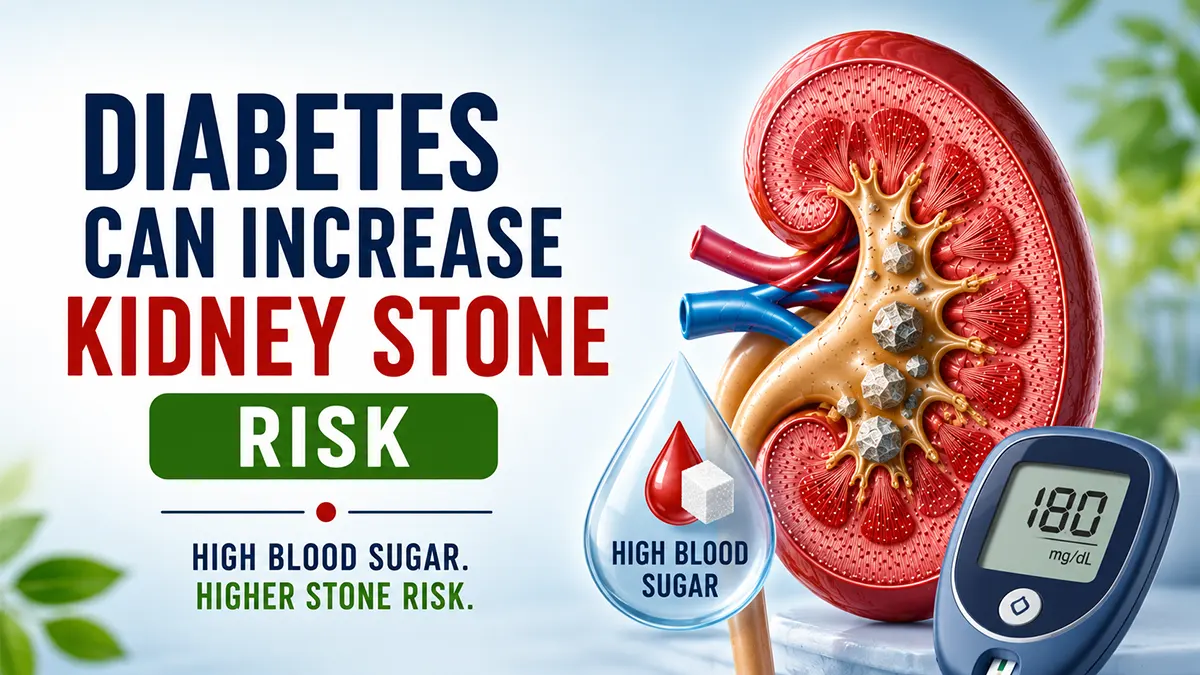
Can Diabetes Increase Kidney Stone Risk? Yes. People with diabetes—especially Type 2 Diabetes—have a significantly higher risk of developing Kidney Stones, particularly uric acid stones.
If you have diabetes and suddenly develop severe pain in your back or side, blood in your urine, or burning while urinating, you may wonder whether high blood sugar is affecting your kidneys.
The answer is yes. Insulin resistance can make urine more acidic, creating the perfect environment for stones to form.
This doctor-reviewed 2026 guide explains why diabetes increases kidney stone risk, warning signs to watch for, and the best diet and prevention tips for people with both conditions.
Table of Contents
Can Diabetes Increase Kidney Stone Risk? How High Blood Sugar Affects Your Kidneys
People with diabetes often have:
- More acidic urine
- Higher uric acid levels
- Increased dehydration
- Greater risk of recurrent stones
This is why diabetes is strongly linked to uric acid kidney stones.
Read Also : how much water should you drink to prevent kidney stones
Why Do Diabetics Get Uric Acid Kidney Stones?
People with diabetes are more likely to develop uric acid stones because insulin resistance reduces the kidney’s ability to remove acid.
This causes:
- Lower urine pH
- More acidic urine
- Increased uric acid crystal formation
Why Does Type 2 Diabetes Make Urine Highly Acidic?
In Type 2 diabetes, insulin resistance interferes with ammonium production in the kidneys.
As a result, urine becomes more acidic, which promotes uric acid stones.
How Insulin Resistance Causes Uric Acid Kidney Stones
Insulin resistance:
- Lowers urine pH
- Raises uric acid concentration
- Reduces protective citrate levels
This combination greatly increases stone risk.
Read Also : why some people get kidney stones repeatedly
Does a High A1C Level Increase Kidney Stone Risk?
Yes. A higher A1C often reflects poor blood sugar control, which increases dehydration and acidic urine.
The worse the glucose control, the greater the stone risk.
Can High Blood Sugar Cause Sudden Kidney Pain?
High blood sugar itself does not usually cause sudden pain. However, it can contribute to:
- Dehydration
- Urinary infections
- Kidney stones
These conditions can cause significant flank pain.
Can a Sudden Spike in Blood Sugar Cause Kidney Pain?
A sudden spike may lead to dehydration and frequent urination, which can worsen stone symptoms if a stone is already present.
Difference Between Diabetic Nephropathy and Kidney Stones
| Feature | Diabetic Nephropathy | Kidney Stones |
|---|---|---|
| Pain | Usually none | Severe flank pain |
| Blood in urine | Less common | Common |
| Protein in urine | Common | Usually absent |
| Onset | Gradual | Sudden |
Does Metformin Affect Your Kidneys or Cause Stones?
Metformin does not directly cause kidney stones.
It is generally safe for kidney stone prevention and may improve insulin resistance.
Read Also : kidney stone diet chart
Can Taking Metformin Cause Kidney Stones?
No evidence suggests that metformin increases kidney stone risk.
Do Diabetic Medications Cause Kidney Stones?
Most diabetes medications do not directly cause stones.
The greater risk comes from uncontrolled diabetes, dehydration, and acidic urine.
Can Metabolic Syndrome Cause Recurrent Kidney Stones?
Yes.
Metabolic Syndrome is strongly associated with uric acid stones and recurrent kidney stones.
How Do You Flush Uric Acid Stones if You Have Diabetes?
Treatment often includes:
- Drinking more water
- Alkalinizing the urine
- Lowering uric acid
- Improving blood sugar control
Uric Acid Stone Prevention Diet for Diabetics
Recommended foods:
- Vegetables
- Whole grains
- Low-fat dairy
- Citrus fruits
- Adequate water
Limit:
- Red meat
- Sugary beverages
- High-fructose foods
What Is the Best Diet for Someone With Both Diabetes and Kidney Stones?
The ideal diet is:
- Low in sugar
- Low in sodium
- Moderate in protein
- Rich in vegetables
- Includes normal calcium intake
Diabetic Kidney Stone Diet Plan to Lower Urine Acidity
Helpful strategies:
- Add lemon water
- Eat more vegetables
- Reduce animal protein
- Maintain healthy weight
Keto Diet for Diabetes Causing Kidney Stones
Keto diets may worsen stone risk by:
- Lowering urinary citrate
- Increasing uric acid
- Promoting dehydration
Summer Dehydration and Kidney Stones in Diabetic Patients
In hot climates such as Hyderabad, diabetes increases dehydration risk because high blood sugar causes more urination.
Does Sugar Disease Cause Kidney Stones?
Yes. The common term “sugar disease” refers to diabetes, which increases the risk of uric acid kidney stones.
Symptoms of Kidney Stones in People With Diabetes
- Sharp back or side pain
- Blood in urine
- Burning urination
- Nausea or vomiting
- Fever if infection is present
Urgent Care for Flank Pain With Uncontrolled Diabetes
Seek urgent medical care if you have:
- Severe pain
- Fever
- Vomiting
- Blood in urine
- High blood sugars with dehydration
When to See a Nephrologist for Diabetic Kidney Stones
Consult a specialist if you have:
- Recurrent stones
- Reduced kidney function
- Persistent protein in urine
- Difficult-to-control diabetes
Real-Life Example
A 52-year-old man with Type 2 diabetes and an A1C of 9.2% developed recurrent uric acid stones. After improving blood sugar control, increasing water intake, and starting potassium citrate, he remained stone-free.
Frequently Asked Questions
Can Diabetes Increase Kidney Stone Risk?
Yes. Diabetes increases the risk of uric acid kidney stones due to acidic urine and insulin resistance.
Does Metformin cause kidney stones?
No. Metformin does not directly cause kidney stones.
Can high blood sugar cause kidney pain?
Indirectly, yes—through dehydration, infection, or kidney stones.
What is the best diet for diabetes and kidney stones?
A low-sugar, low-sodium, moderate-protein diet with adequate hydration.
Why do diabetics get uric acid stones?
Because insulin resistance lowers urine pH.
Internal Linking Suggestions
- Kidney Stone Symptoms and Warning Signs
- Uric Acid Kidney Stones: Causes and Treatment
- Kidney Stone Diet Chart
- How Much Water Should You Drink to Prevent Kidney Stones?
- Why Some People Get Kidney Stones Repeatedly
Conclusion
Can Diabetes Increase Kidney Stone Risk? Absolutely. Poor blood sugar control, insulin resistance, and acidic urine make people with diabetes more likely to develop uric acid kidney stones.
The good news is that better glucose control, smart dietary changes, and proper hydration can significantly reduce your risk.
Dr. Jayanth Reddy – Consultant Urologist
My Health Hospitals, Hyderabad
This content has been medically reviewed for accuracy and reliability based on current urology treatment guidelines.
According to the kidney stone symptoms NHS guide, severe flank pain can worsen during rest or nighttime.
Author
Yamanandan Reddy
Health Content Writer & Frontend Developer
Yamanandan Reddy is a health content writer and frontend developer with over 4 years of experience in website design and digital content creation. He writes research-based health articles to help readers understand symptoms, causes, treatments, and prevention methods related to common health conditions.
His articles are written using information from trusted medical sources such as the World Health Organization (WHO), Mayo Clinic, and the Centers for Disease Control and Prevention (CDC).
Sources
The information in this article is researched and verified using trusted medical resources, including:
• World Health Organization (WHO)
• Mayo Clinic
• National Institutes of Health (NIH)
• Centers for Disease Control and Prevention
⚠️ Medical Disclaimer
This content is for informational purposes only and does not replace professional medical advice. Always consult a qualified healthcare provider for diagnosis and treatment.
2 thoughts on “Can Diabetes Increase Kidney Stone Risk? 7 Important Facts Doctors Want You to Know in 2026”