
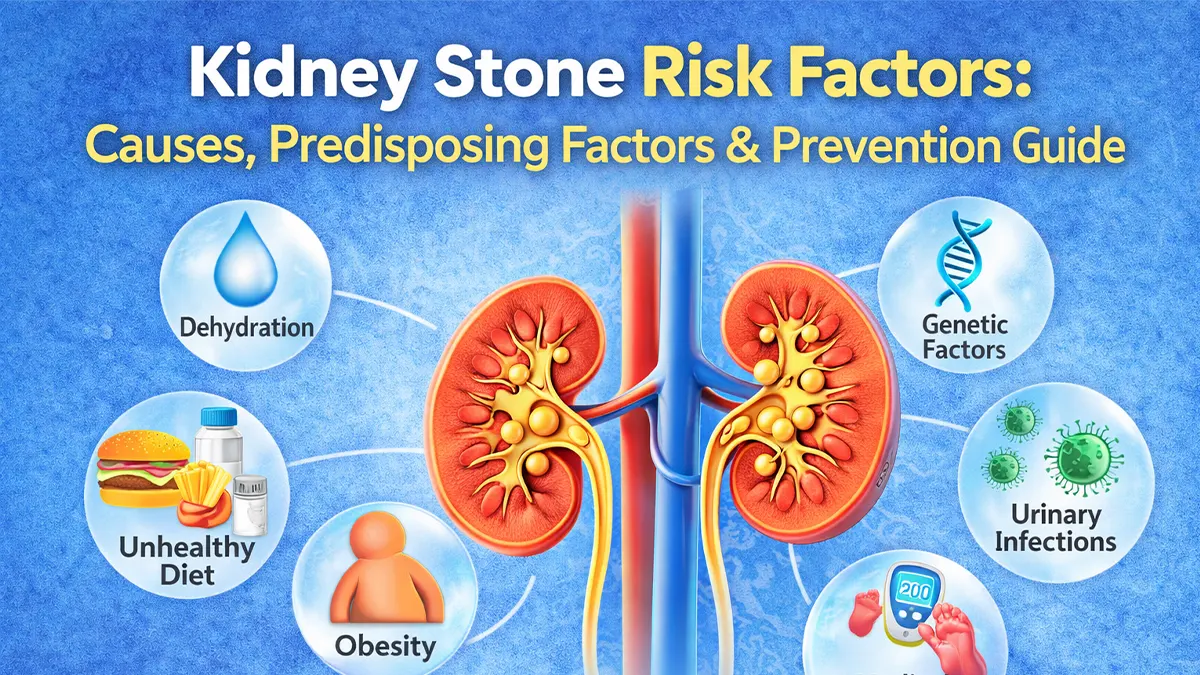
Kidney stones are becoming increasingly common worldwide, especially in developed countries like the USA, UK, and Canada. Understanding kidney stone risk factors is essential for prevention, early detection, and long-term kidney health. Many individuals develop stones due to lifestyle patterns, metabolic conditions, or dietary habits without realizing their risk.
Kidney stones form when minerals such as calcium, oxalate, or uric acid crystallize in concentrated urine. While treatment can remove existing stones, identifying and managing risk factors is the most effective way to prevent recurrence.
Table of Contents
Understanding Kidney Stone Disease Risk Factors
Kidney stone disease is influenced by a combination of biological, environmental, and lifestyle factors. These risk elements affect urine composition, mineral concentration, and kidney function.
Medical research highlights that stone formation is not caused by a single factor but rather a complex interaction of metabolic processes and lifestyle patterns.
Understanding early kidney stone symptoms helps individuals recognize warning signs before severe pain or complications develop.
Major Kidney Stone Risk Factors
1️⃣ Dehydration and Low Fluid Intake
Dehydration is the most common risk factor for kidney stones. When the body lacks adequate water:
- Urine becomes concentrated
- Minerals crystallize more easily
- Stone formation risk increases
This risk is higher in hot climates and among individuals with physically demanding jobs.
Choosing the best water for kidney stones helps dilute urine minerals and significantly lowers the chances of crystal formation.
2️⃣ Dietary Risk Factors for Kidney Stones
Diet plays a crucial role in kidney stone development.
High-risk dietary patterns include:
- Excessive salt intake
- High oxalate foods (spinach, nuts, chocolate)
- High animal protein consumption
- Low calcium intake
- High sugar and processed foods
These dietary factors alter urine chemistry and increase stone formation risk.
3️⃣ Obesity and Metabolic Syndrome
Obesity is strongly associated with kidney stone formation. Excess body weight can:
- Increase uric acid levels
- Reduce urine pH
- Promote calcium oxalate stone formation
Studies show individuals with metabolic syndrome have a higher likelihood of recurrent kidney stones.
4️⃣ Genetic and Family History Risk Factors
Genetics play a significant role in kidney stone disease risk.
Individuals with a family history of kidney stones are more likely to develop:
- Calcium stones
- Cystine stones
- Metabolic abnormalities
Genetic predisposition affects mineral metabolism and urinary excretion patterns.
5️⃣ Medical Conditions Increasing Stone Risk
Certain health conditions increase kidney stone risk factors, including:
- Hyperparathyroidism
- Gout
- Chronic kidney disease
- Diabetes
- Urinary tract infections
These conditions alter mineral balance and urine composition.
6️⃣ Risk Factors for Calcium Oxalate Kidney Stones
Calcium oxalate stones are the most common type.
Key risk factors include:
- High oxalate diet
- Low magnesium intake
- Vitamin D imbalance
- Excess sodium consumption
Managing these factors can significantly reduce stone recurrence.
7️⃣ Urinary Tract Infections and Stone Formation
UTIs can contribute to kidney stone development, particularly struvite stones.
Infections change urine chemistry, allowing bacteria to promote crystal formation. Chronic or untreated infections increase long-term stone risk.
8️⃣ Lifestyle Risk Factors for Kidney Stone Development
Modern lifestyle patterns contribute significantly to stone risk:
- Sedentary behavior
- High processed food intake
- Irregular hydration habits
- Excessive caffeine or sugary drinks
These habits affect kidney function and mineral metabolism.
Patients with previous stones should understand kidney stone recurrence risk and follow preventive medical advice to avoid repeated painful episodes.
Pathophysiology of Kidney Stone Formation
Kidney stone formation involves several physiological mechanisms:
- Supersaturation of urine with minerals
- Crystal nucleation and aggregation
- Reduced inhibitors of crystallization
- Retention of crystals in renal tubules
Understanding this pathophysiology helps guide prevention and treatment strategies.
Comparison Table: Kidney Stone Predisposing Factors
| Risk Factor | Mechanism | Prevention Strategy |
|---|---|---|
| Dehydration | Concentrated urine | Increase daily water intake |
| High Salt Diet | Increased calcium excretion | Reduce sodium consumption |
| Obesity | Metabolic imbalance | Weight management |
| Genetics | Altered mineral metabolism | Regular monitoring |
| UTIs | Infection-related crystallization | Early treatment |
| High Oxalate Intake | Oxalate crystallization | Balanced diet |
| Sedentary Lifestyle | Reduced metabolism | Physical activity |
Risk Factors for Kidney Stone Recurrence
Patients who have experienced kidney stones once are at higher risk of recurrence.
Recurrence risk increases due to:
- Poor hydration habits
- Incomplete dietary modification
- Metabolic abnormalities
- Lack of follow-up medical care
Preventive strategies must focus on long-term lifestyle changes.
Kidney Stone Risk Factors in USA, UK & Canada
Kidney stone prevalence is increasing in Western countries due to:
- High processed food consumption
- Sedentary lifestyle
- Rising obesity rates
- Climate-related dehydration
Public health awareness campaigns emphasize preventive hydration and dietary balance.
How to Reduce Kidney Stone Risk Naturally
Preventive measures include:
✔ Drink 2.5–3 liters of water daily
✔ Maintain balanced calcium intake
✔ Limit salt and processed foods
✔ Reduce high-oxalate foods
✔ Maintain healthy body weight
✔ Manage metabolic conditions
✔ Regular kidney health screening
Lifestyle prevention is more effective than repeated treatment.
When to See a Doctor
Seek medical attention if you experience:
- Severe flank pain
- Blood in urine
- Persistent nausea or vomiting
- Recurrent urinary infections
- History of kidney stones
Early diagnosis helps prevent complications.
Conclusion
Kidney stone risk factors are influenced by hydration, diet, genetics, and lifestyle. Understanding these predisposing factors is essential for prevention, especially in countries with high stone prevalence like the USA, UK, and Canada. Long-term kidney health depends on proactive lifestyle changes, medical monitoring, and early risk management.
Medically Reviewed By:
Dr. Jayanth Reddy – Consultant Urologist
My Health Hospitals, Hyderabad
This content has been medically reviewed for accuracy and reliability based on current urology treatment guidelines.
According to the Mayo Clinic, kidney stone recurrence is common without proper prevention. Staying well hydrated, following a balanced diet, and managing underlying medical conditions can significantly reduce the risk of new stone formation.
Author
Yamanandan Reddy
Health Content Writer & Frontend Developer
Yamanandan Reddy is a health content writer and frontend developer with over 4 years of experience in website design and digital content creation. He writes research-based health articles to help readers understand symptoms, causes, treatments, and prevention methods related to common health conditions.
His articles are written using information from trusted medical sources such as the World Health Organization (WHO), Mayo Clinic, and the Centers for Disease Control and Prevention (CDC).
Sources
The information in this article is researched and verified using trusted medical resources, including:
• World Health Organization (WHO)
• Mayo Clinic
• National Institutes of Health (NIH)
• Centers for Disease Control and Prevention (CDC)
Disclaimer
The information provided on HealthyWayCare.com is for educational and informational purposes only. It should not be considered medical advice, diagnosis, or treatment. Always consult a qualified healthcare professional before making any medical decisions or starting any treatment.