
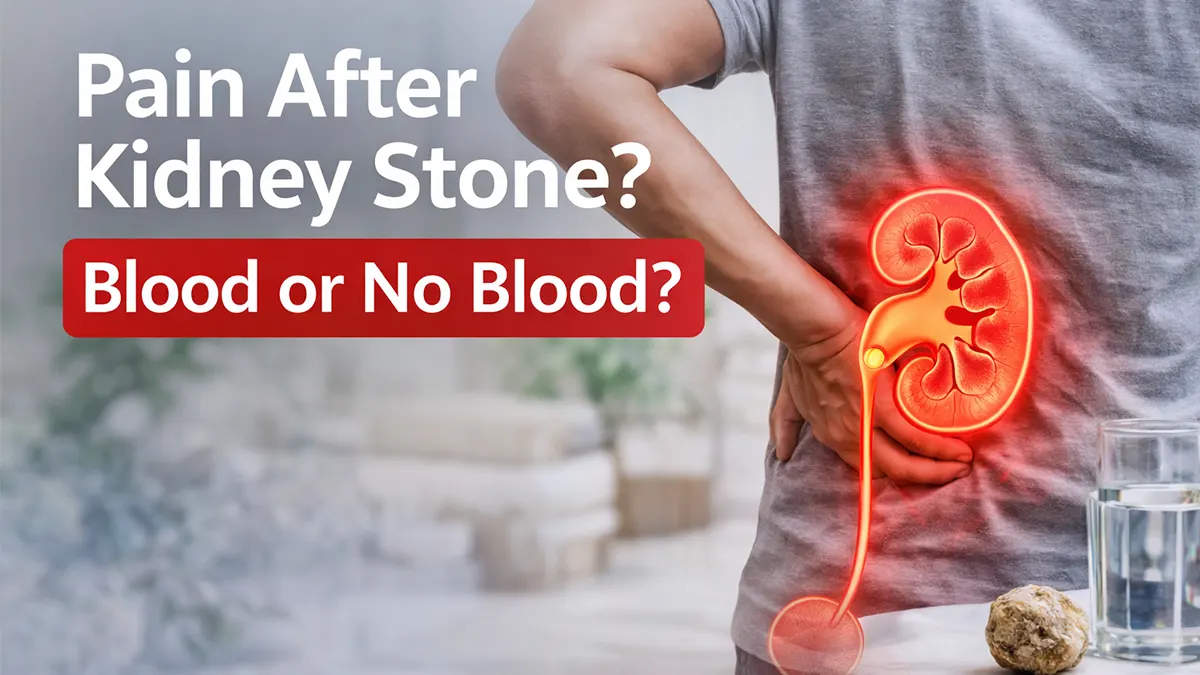
Kidney stone pain without blood in urine can feel confusing and even misleading. Many people believe that blood in urine is always present with kidney stones — but that’s not true. In reality, you can have kidney stone pain without blood in urine, especially in early or mild cases.
This often leads patients to ignore symptoms, delaying diagnosis and treatment. Understanding how kidney stones behave — with or without visible blood — is essential for early care and better recovery.
Table of Contents
Can You Have Kidney Stone Pain Without Blood in Urine?
Yes, absolutely.
👉 Can you have kidney stone pain without blood in urine?
✔ Yes — many patients experience pain without visible blood.
This happens because:
- The stone may not damage blood vessels
- Bleeding can be microscopic (not visible)
- Early-stage stones may not cause irritation
- Hydration levels dilute urine
So, even without blood, kidney stone pain without urinary symptoms can still occur.
If you’re unsure whether your pain is related to stones, understanding the early warning signs can help. Read our detailed guide on kidney stone symptoms.
Why Some Kidney Stones Don’t Cause Blood in Urine
Many people search:
👉 Can you still have kidney stones without blood in urine?
Here’s why:
1️⃣ No Tissue Injury
If the stone moves smoothly, it may not scratch the urinary tract.
2️⃣ Microscopic Blood Only
Blood may be present but not visible to the eye.
3️⃣ Stone Location Matters
Pain depends on location, not always bleeding.
4️⃣ Early Stage Stones
Small stones may cause discomfort without bleeding.
Pain changes as the stone moves. Learn how it develops in our complete guide on kidney stone pain stages.
Kidney Stone Pain With vs Without Blood in Urine
| Feature | Kidney Stone Pain With Blood in Urine | Kidney Stone Pain Without Blood in Urine |
|---|---|---|
| Visibility of Blood | Visible red/pink urine (hematuria) | No visible blood (may be microscopic) |
| Pain Intensity | Often severe due to irritation | Can be mild to severe depending on blockage |
| Cause of Pain | Tissue damage + stone movement | Mainly pressure, blockage, or spasms |
| Stage of Stone | Usually active movement or irritation stage | Early stage or smooth movement |
| Urinary Symptoms | Burning, urgency, frequent urination | May have no urinary symptoms |
| Diagnosis Difficulty | Easier due to visible symptom | Harder, often delayed diagnosis |
| Risk Level | Moderate to high if untreated | Can be overlooked → delayed care |
| Common Locations of Pain | Back, side, groin + burning urine | Back, flank, abdomen, groin |
| Medical Attention Needed | Immediate if blood is heavy | Needed if pain is severe or persistent |
| Possible Misinterpretation | Clearly identified as kidney issue | Often mistaken for muscle pain |
Many people ask whether kidney stone pain without blood in urine is possible. This comparison helps you understand the difference clearly.
Kidney Stone Pain But No Blood in Urine – What It Feels Like
Patients often report:
- Sharp back or side pain
- Pain radiating to groin
- Sudden wave-like pain (renal colic)
- Nausea or vomiting
- Burning urination
👉 This is classic kidney stone pain but no blood in urine
Where Is Kidney Stone Pain Felt?
A common question:
👉 Where kidney stone pain felt?
Pain location depends on stone movement:
- Kidney area → upper back pain
- Ureter → severe side pain
- Groin → radiating pain
- Bladder → pressure or urgency
👉 This explains why where kidney stone pain starts can vary.
Will Kidney Stone Pain Get Worse?
👉 Will kidney stone pain get worse?
Yes.
Pain usually:
- Starts mild
- Becomes intense as stone moves
- Peaks in ureter stage
- Reduces after passing
👉 The most painful kidney stone stage is when it blocks the ureter.
For mild cases, natural relief methods can help. Discover safe kidney stone home remedies to manage pain effectively.
Kidney Stone Blood in Urine Without Pain – Is It Possible?
Yes, the opposite can also happen.
👉 Can a kidney stone cause blood in urine without pain?
✔ Yes
Some patients experience:
- Blood in urine
- No pain
This happens when:
- Stone is not blocking urine
- No pressure buildup
- No nerve irritation
Kidney Stone Pain Without Urinary Symptoms
👉 Kidney stone pain without urinary symptoms is possible
You may not have:
- Burning urine
- Frequent urination
- Blood in urine
But still feel:
✔ Severe back pain
✔ Sudden cramps
Hydration is key to prevention. Learn which is the best water for kidney stones to flush your system.
Pain When Kidney Stone Is in Bladder
👉 Pain when kidney stone is in bladder
Symptoms include:
- Urgency to urinate
- Lower abdominal discomfort
- Mild burning
👉 Will kidney stone hurt in bladder?
✔ Usually less painful than ureter stage
How Bad Is Kidney Stone Pain (1–10 Scale)?
👉 How bad is kidney stone pain 1–10?
Most patients rate it:
🔥 8 to 10 / 10
It is often described as:
- One of the worst pains
- Worse than childbirth (in some cases)
No Pain When Passing Kidney Stone – Is It Normal?
👉 No pain when passing kidney stone
Yes, possible if:
- Stone is small
- No blockage
- Smooth passage
Some patients pass stones without noticing.
When Does Kidney Stone Pain Stop?
👉 When kidney stone pain stops
Pain usually stops when:
✔ Stone reaches bladder
✔ Stone is passed
✔ Pressure reduces
But mild discomfort may continue briefly.
Kidney Stone Pain Without Kidney Stones – Possible?
Sometimes people feel:
👉 Kidney stone pain without kidney stones
This may be due to:
- Muscle pain
- Urinary infection
- Other kidney conditions
👉 Always confirm with diagnosis.
When to See a Doctor
Seek medical help if:
🚨 Severe pain
🚨 Fever
🚨 Vomiting
🚨 Blood in urine
🚨 Pain lasting long
Prevention Tips
✔ Drink enough water
✔ Reduce salt
✔ Avoid high oxalate foods
✔ Maintain healthy diet
✔ Regular checkups
Can you have kidney stone pain without blood in urine?
Yes, you can have kidney stone pain without blood in urine. Not all stones cause visible bleeding, and pain depends more on blockage and movement than bleeding.
Why do I have kidney stone pain but no blood in urine?
Kidney stone pain but no blood in urine may occur if the stone is not causing tissue damage or if bleeding is microscopic and not visible to the eye.
Can kidney stones cause blood in urine without pain?
Yes, kidney stones can cause blood in urine without pain if they are not blocking urine flow or irritating nerves. This is common in early-stage stones.
Can you still have kidney stones without blood in urine?
Yes, you can still have kidney stones without blood in urine. Many cases show pain or discomfort without any visible blood, especially in mild or early stages.
Where is kidney stone pain usually felt?
Kidney stone pain is usually felt in the back, side (flank), or lower abdomen. It may also radiate to the groin depending on the stone’s location.
Where does kidney stone pain start and how does it move?
Kidney stone pain starts in the kidney area (upper back) and moves downward toward the abdomen and groin as the stone travels through the urinary tract.
Will kidney stone pain get worse over time?
Yes, kidney stone pain can get worse as the stone moves into the ureter. This stage often causes intense, wave-like pain known as renal colic.
Can kidney stone pain occur without urinary symptoms?
Yes, kidney stone pain without urinary symptoms is possible. Some patients may not experience burning urine, frequency, or blood but still have severe pain.
Will a kidney stone hurt when it reaches the bladder?
Kidney stone pain usually reduces when it reaches the bladder. Some patients may feel mild pressure or discomfort, but it is less painful than earlier stages.
How bad is kidney stone pain on a scale of 1 to 10?
Kidney stone pain is often rated between 8 to 10 on the pain scale. It is considered one of the most severe types of pain due to ureter spasms.
Can a kidney stone pass without pain?
Yes, a kidney stone can pass without pain if it is very small and does not cause blockage or irritation during movement.
When does kidney stone pain usually stop?
Kidney stone pain usually stops after the stone passes into the bladder or leaves the body. However, mild discomfort may continue for a short time.
Final Insight
Kidney stone pain without blood in urine is not only possible but quite common. Relying only on visible symptoms like blood can delay diagnosis and worsen the condition. Understanding pain patterns, recognizing early signs, and seeking timely care are essential for preventing complications.
For people in the USA, UK, and India, lifestyle factors such as dehydration and diet play a major role in kidney stone formation. Awareness is the key to prevention and long-term kidney health.
Dr. Jayanth Reddy – Consultant Urologist
My Health Hospitals, Hyderabad
This content has been medically reviewed for accuracy and reliability based on current urology treatment guidelines.
According to the kidney stone symptoms NHS guide, severe flank pain can worsen during rest or nighttime.
Author
Yamanandan Reddy
Health Content Writer & Frontend Developer
Yamanandan Reddy is a health content writer and frontend developer with over 4 years of experience in website design and digital content creation. He writes research-based health articles to help readers understand symptoms, causes, treatments, and prevention methods related to common health conditions.
His articles are written using information from trusted medical sources such as the World Health Organization (WHO), Mayo Clinic, and the Centers for Disease Control and Prevention (CDC).
Sources
The information in this article is researched and verified using trusted medical resources, including:
• World Health Organization (WHO)
• Mayo Clinic
• National Institutes of Health (NIH)
• Centers for Disease Control and Prevention (CDC)
Disclaimer
The information provided on HealthyWayCare.com is for educational and informational purposes only. It should not be considered medical advice, diagnosis, or treatment. Always consult a qualified healthcare professional before making any medical decisions or starting any treatment.