Kidney stone pain relief positions can make a big difference when pain suddenly hits. Many patients search for how to relieve kidney stone pain fast or what is the best position for kidney stone pain because the discomfort can be intense, wave-like, and difficult to manage.
This guide explains where kidney stone pain occurs, why it moves, and the best positions to relieve pain quickly at home. It provides simple and medically reliable tips to help manage symptoms effectively.
Table of Contents
Where Does Kidney Stone Pain Hurt the Most?
Kidney stone pain is usually felt in the:
- Lower back or side (flank area)
- Below the ribs
- Abdomen or stomach
- Groin or pelvic region
Many people ask:
Where is kidney stone pain most common?
👉 It typically starts near the kidney (back/side) and moves downward as the stone travels.
Understanding what does kidney stone pain feel like helps identify symptoms before choosing the right relief position.
Can Kidney Stone Pain Move Around?
Yes. A common question is:
Will kidney stone pain move around?
✔ Pain often moves from back → abdomen → groin
✔ It comes in waves (colicky pain)
✔ It may feel different depending on stone location
This is why patients feel pain in multiple areas.
Many patients struggle with kidney stone pain at night causes, which can affect sleep and comfort.
Can Kidney Stone Pain Be Positional?
Yes — kidney stone pain can be positional.
Certain positions may:
✔ Reduce pressure on ureter
✔ Help urine flow
✔ Ease muscle tension
That’s why finding the right kidney stone pain relief position is important.
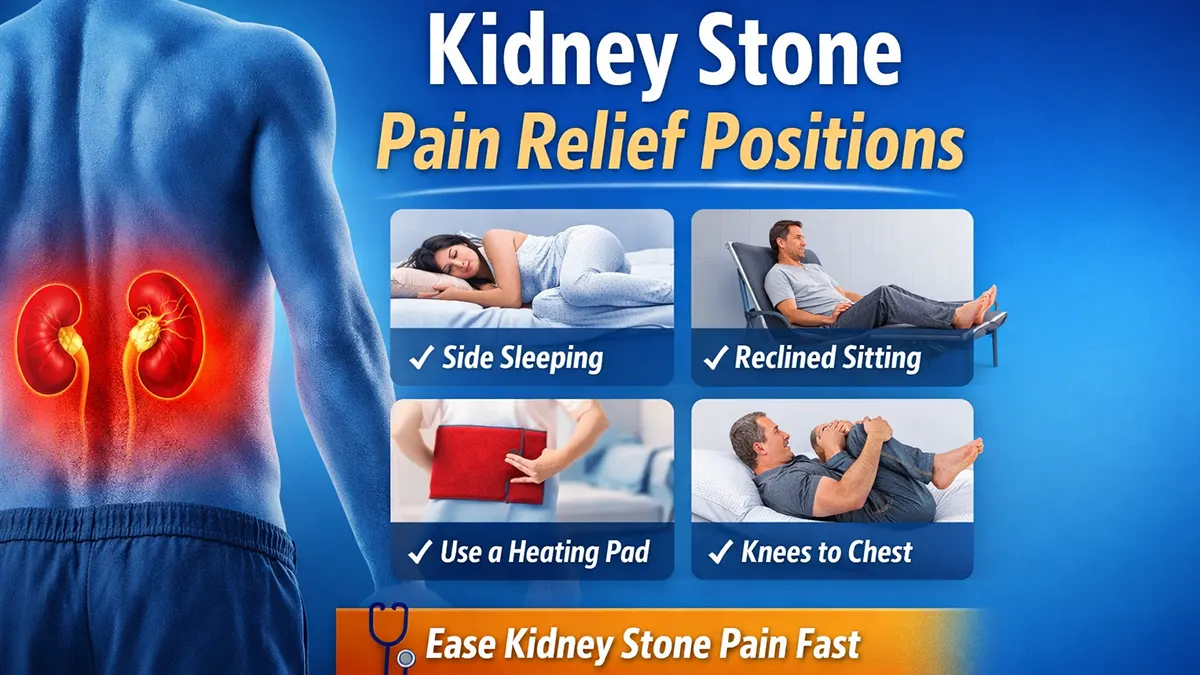
✅ Best Kidney Stone Pain Relief Positions (Work Fast)
1. Side-Lying Position (Opposite Side)
Best position to relieve kidney stone pain
- Lie on the side opposite the painful kidney
- Place a pillow under waist
- Bend knees slightly
👉 Helps reduce pressure and improves comfort
2. Fetal Position (Curling Up)
Kidney stone pain relief sleeping position
- Lie on your side
- Pull knees toward chest
- Keep spine slightly curved
👉 Reduces abdominal tension and eases pain waves
3. Reclined Sitting Position
Position to relieve kidney stone pain quickly
- Sit with back supported at 45°
- Keep legs slightly elevated
👉 Helps reduce strain on kidneys and spine
4. Standing & Walking Slowly
What to do when kidney stone pain hits
- Walk slowly around
- Avoid lying flat for long periods
👉 Movement may help the stone pass
5. Heat Therapy Position
Kidney stone pain relief heat method
- Lie on back or side
- Apply heating pad to painful area
👉 Relaxes muscles and improves blood flow
6. Knee-to-Chest Position
Best position for severe pain
- Lie on back
- Bring knees toward chest
- Hold gently
👉 Reduces pressure and spasms
These kidney stone pain relief positions help reduce pressure and improve comfort quickly.
It’s important to differentiate kidney stone back pain vs muscle pain to avoid confusion and delay in treatment.
Best kidney stone pain relief positions:
- Lie on the opposite side of the pain
- Use the fetal position (knees to chest)
- Sit in a slightly reclined position
- Walk slowly to encourage stone movement
- Apply heat while lying or sitting
- Use knee-to-chest position for pressure relief
📊 Quick Relief Positions for Kidney Stone Pain
Choosing the right kidney stone pain relief positions can make a big difference during severe pain episodes.
| Position | Best For | Benefit |
|---|---|---|
| Side-lying | Night pain | Reduces kidney pressure |
| Fetal position | Sleep relief | Eases cramps |
| Sitting reclined | Daytime relief | Reduces strain |
| Walking | Stone movement | Helps passage |
| Heat therapy | Severe pain | Relaxes muscles |
| Knee-to-chest | Spasms | Pain reduction |
What Position Makes Kidney Stone Pain Worse?
Avoid these:
❌ Lying flat on back
❌ Sitting hunched forward
❌ Sleeping on painful side
❌ Staying still too long
These can increase pressure and worsen symptoms.
How to Relieve Kidney Stone Pain Fast at Home
Many people search:
How to relieve kidney stone pain instantly
Try these:
✔ Drink plenty of water
✔ Use a hot water bag
✔ Take prescribed pain relief medication
✔ Stay active (light movement)
✔ Follow doctor advice
Learning about kidney stone pain stages explained helps understand how pain changes as the stone moves.
What Helps Relieve Kidney Stone Pain Fast?
Best kidney stone pain reliever methods:
- Hydration
- Heat therapy
- Painkillers (as prescribed)
- Alpha-blockers (doctor prescribed)
Kidney Stone Pain Relief Without Medication
If you want natural methods:
✔ Warm bath (kidney stone pain relief hot bath)
✔ Herbal fluids (doctor-approved)
✔ Gentle stretching
✔ Proper sleep posture
Staying hydrated with the best drinks for kidney stone prevention can help reduce pain and support recovery.
Kidney Stone Pain Relief Sleeping Position
Best options:
- Side sleeping (opposite pain side)
- Fetal position
- Slightly elevated upper body
These reduce kidney stone pain during sleep.
When Is Kidney Stone Pain Most Intense?
Pain is strongest when:
- Stone enters ureter
- Urine flow is blocked
- Muscle spasms occur
This is when patients feel severe wave-like pain.
How Often Does Kidney Stone Pain Occur?
Many ask:
- How often does kidney stone pain come and go?
- How often does kidney stone pain happen?
👉 Pain usually comes in episodes (waves) lasting minutes to hours.
Will Kidney Stone Pain Go Away on Its Own?
✔ Small stones may pass naturally
✔ Pain may stop temporarily
✔ But can return if stone is still present
So yes:
👉 Kidney stone pain can go away and come back
Will Kidney Stone Pain Come Back?
Yes, especially if:
- Stone hasn’t passed
- Dehydration continues
- Multiple stones exist
When Kidney Stone Pain Stops
Pain may stop when:
✔ Stone moves out of ureter
✔ Stone passes through urine
✔ Pressure is relieved
Can Kidney Stone Pain Radiate to Legs or Upward?
Yes:
✔ Can radiate to groin
✔ Can spread to thigh
✔ Rarely moves upward
Is Kidney Stone Pain Really That Painful?
Yes. Many patients describe it as:
- One of the worst pains
- Similar to labor contractions
- Sudden and intense
Can You Work with Kidney Stone Pain?
In mild cases, yes. But severe pain may:
❌ Affect concentration
❌ Require rest or medical care
Best Painkiller for Kidney Stone Pain
Doctors may prescribe:
- NSAIDs (pain relief)
- Antispasmodics
- Alpha-blockers
⚠️ Always consult a doctor before taking medication.
Following a kidney stone prevention diet plan can lower the chances of future stone formation.
What to Do When Kidney Stone Pain Hits Suddenly
✔ Change position immediately
✔ Drink water
✔ Apply heat
✔ Take prescribed medicine
✔ Seek medical help if severe
What Is the Best Position to Relieve Kidney Stone Pain Fast at Home?
The best kidney stone pain relief position is lying on the opposite side of the painful kidney or using a fetal position. These positions reduce pressure on the urinary tract and help ease pain quickly.
Which Sleeping Position Helps with Kidney Stone Pain Relief at Night?
The best sleeping position for kidney stone pain relief is side-lying with knees slightly bent or in a fetal position. This helps reduce strain and improves comfort during nighttime pain episodes.
Can Kidney Stone Pain Be Positional and Change with Body Movement?
Yes, kidney stone pain can be positional. Changing posture may reduce or increase pressure in the urinary tract, which is why certain positions help relieve kidney stone pain faster.
How to Relieve Kidney Stone Pain Quickly Without Medication at Home?
You can relieve kidney stone pain quickly by drinking water, applying heat to the lower back, and using comfortable positions like side-lying or sitting reclined. Gentle movement can also help the stone pass.
What Position Helps When Kidney Stone Pain Moves from Back to Front?
When kidney stone pain moves from back to front, the best position is a reclined sitting or side-lying posture. These positions reduce pressure and help manage pain as the stone travels.
How to Lay with Kidney Stone Pain for Instant Relief?
To lay with kidney stone pain for instant relief, lie on the opposite side of pain, use a pillow for support, and avoid flat positions. This reduces discomfort and improves relaxation.
What Helps Relieve Kidney Stone Pain Fast During Severe Episodes?
Fast relief methods include proper positioning, heat therapy, hydration, and prescribed medications. Combining these methods can significantly reduce pain intensity.
Are Kidney Stone Pain Relief Positions Effective During Sleep?
Yes, kidney stone pain relief sleeping positions like the fetal position or side sleeping can help reduce pain and improve sleep quality during episodes.
Final Thoughts
Finding the right kidney stone pain relief position can significantly reduce discomfort and help manage symptoms at home. While positions and home remedies provide relief, persistent or severe pain requires medical attention.
Early diagnosis and proper treatment can prevent complications and improve recovery.
Using the right kidney stone pain relief positions along with proper hydration and medical care can significantly reduce discomfort and support faster recovery.
Medically Reviewed By:
Dr. Jayanth Reddy – Consultant Urologist
My Health Hospitals, Hyderabad
This content has been medically reviewed for accuracy and reliability based on current urology treatment guidelines.
According to the kidney stone symptoms NHS guide, severe flank pain can worsen during rest or nighttime.
Author
Yamanandan Reddy
Health Content Writer & Frontend Developer
Yamanandan Reddy is a health content writer and frontend developer with over 4 years of experience in website design and digital content creation. He writes research-based health articles to help readers understand symptoms, causes, treatments, and prevention methods related to common health conditions.
His articles are written using information from trusted medical sources such as the World Health Organization (WHO), Mayo Clinic, and the Centers for Disease Control and Prevention (CDC).
Sources
The information in this article is researched and verified using trusted medical resources, including:
• World Health Organization (WHO)
• Mayo Clinic
• National Institutes of Health (NIH)
• Centers for Disease Control and Prevention (CDC)
Disclaimer
The information provided on HealthyWayCare.com is for educational and informational purposes only. It should not be considered medical advice, diagnosis, or treatment. Always consult a qualified healthcare professional before making any medical decisions or starting any treatment.