
🔥 How Kidney Stones Form: Step-by-Step Medical Guide (2026)
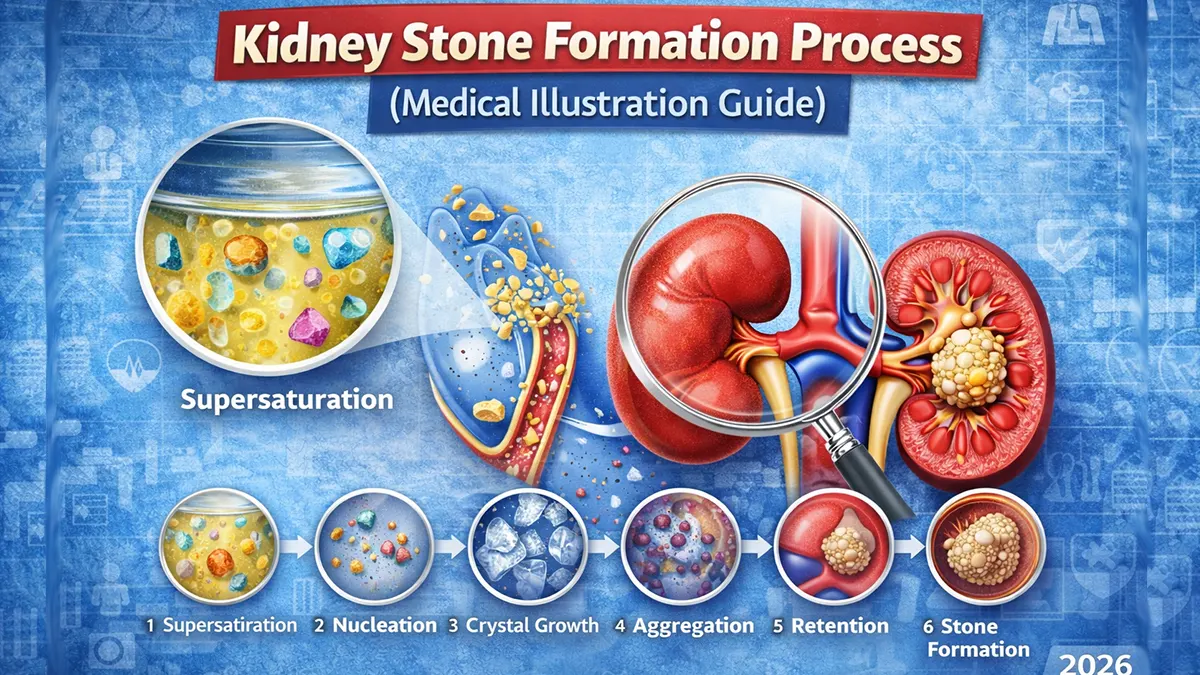
The kidney stone formation process is a gradual medical condition that develops when minerals crystallize inside the kidneys
Kidney stones don’t appear overnight—they develop through a gradual process inside your kidneys. Understanding the kidney stone formation process is the key to preventing pain, complications, and recurrence. In 2026, with rising cases in the USA due to diet and lifestyle, knowing how stones form can help you stop them before they start.
This guide explains how kidney stones form step by step, the science behind crystal formation, and how you can prevent it naturally using proven medical strategies.
Table of Contents
🧠 What Are Kidney Stones?
Kidney stones are hard deposits made of minerals and salts that form inside your kidneys when urine becomes concentrated. The most common types include:
- Calcium oxalate stones
- Uric acid stones
- Struvite stones
- Cystine stones
🔬 Kidney Stone Formation Process (Step-by-Step)
1. Supersaturation of Urine
The process begins when urine contains high levels of stone-forming substances, such as calcium, oxalate, or uric acid.
👉 When these substances exceed normal levels, urine becomes supersaturated, meaning it cannot dissolve them properly.
Common Causes:
- Dehydration
- High salt intake
- Excess protein consumption
- High sugar (especially fructose)
2. Nucleation (Crystal Formation Begins)
In this stage, tiny crystals begin to form. This is called nucleation.
👉 Think of it like sugar crystallizing in a saturated solution—small particles act as a “seed” for stone formation.
There are two types:
- Homogeneous nucleation – crystals form on their own
- Heterogeneous nucleation – crystals form around debris or cells
3. Crystal Growth & Aggregation
Once crystals form, they start to grow and stick together.
👉 This is known as aggregation, where multiple crystals combine to form larger particles.
Key Factors:
- Low urine volume
- Lack of inhibitors (like citrate)
- High mineral concentration
4. Retention in the Kidney
Normally, small crystals pass through urine without issues. But sometimes they get trapped in kidney tubules.
👉 This retention allows stones to grow larger instead of being flushed out.
Why retention happens:
- Damage to kidney lining
- Sticky crystal surfaces
- Low urine flow
5. Stone Growth & Maturation
Over time, retained crystals grow into clinically significant kidney stones.
👉 At this stage, stones can:
- Remain in the kidney
- Move into the ureter
- Cause severe pain (renal colic)
👉 Calcium Oxalate Kidney Stones Guide
⚠️ Symptoms During Stone Formation
Kidney stones may remain silent until they move. Common symptoms include:
- Severe back or side pain
- Pain during urination
- Blood in urine
- Nausea and vomiting
- Frequent urination
👉 early signs of kidney stones you should not ignore
🧬 Why Kidney Stones Form (Root Causes – 2026)
1. Dehydration (Top Cause)
Low water intake concentrates urine → increases crystal formation.
2. Diet Factors (USA Trends)
- High sodium foods
- Processed foods
- High fructose corn syrup
- Excess animal protein
3. Low Citrate Levels
Citrate prevents crystal formation. Low levels increase risk.
4. Medical Conditions
- Obesity
- Diabetes
- Gout
- Hyperparathyroidism
👉 uric acid kidney stones diet and symptoms guide
🥗 Prevention Based on Formation Process
💧 1. Increase Hydration
- Drink 2.5–3 liters daily
- Keeps urine diluted
🍋 2. Boost Citrate (Natural Inhibitor)
- Lemon water
- Citrus fruits
🥦 3. Balanced Diet
- Reduce salt
- Moderate protein
- Increase vegetables
🚫 4. Avoid High-Risk Foods
- Sugary sodas
- Processed foods
- Excess red meat
👉 best diet plan for kidney stone prevention in 2026
📊 Kidney Stone Formation Flow (Quick Summary)
- Supersaturation of urine
- Crystal nucleation
- Crystal growth
- Aggregation
- Retention in kidney
- Stone formation
Understanding the kidney stone formation process helps in early prevention and better treatment outcomes.
📌 Key Takeaways
- Kidney stones develop gradually—not instantly
- Dehydration is the #1 trigger
- Crystal formation → growth → retention = stones
- Diet and lifestyle play a major role
- Prevention is easier than treatment
🔹 What is the kidney stone formation process and how does it start?
The kidney stone formation process begins when urine becomes highly concentrated with minerals like calcium, oxalate, or uric acid. This leads to supersaturation, where crystals start forming and gradually grow into stones if not flushed out through urine.
🔹 How do kidney stones form step by step inside the kidneys?
The kidney stone formation process step by step includes urine supersaturation, crystal nucleation, crystal growth, aggregation, and retention in the kidneys. Over time, these crystals combine and develop into larger stones that may cause pain when they move.
🔹 What are the main causes of kidney stone formation in adults?
The most common causes of the kidney stone formation process in adults include dehydration, high sodium intake, excessive consumption of animal protein, high fructose intake, and low levels of citrate in urine. Lifestyle and diet play a major role.
🔹 Can the kidney stone formation process be reversed naturally?
Yes, the kidney stone formation process can be prevented or slowed naturally by increasing water intake, consuming citrate-rich foods like lemon, reducing salt and sugar, and following a balanced diet. Early-stage crystals can often be flushed out before becoming stones.
🔹 What foods increase the risk of kidney stone formation process?
Foods that increase the risk of the kidney stone formation process include red meat, processed foods, high-sodium snacks, sugary sodas (especially high fructose corn syrup), and high-oxalate foods when consumed in excess.
🔹 How does dehydration affect the kidney stone formation process?
Dehydration is the leading trigger of the kidney stone formation process. When you don’t drink enough water, urine becomes concentrated, making it easier for minerals to crystallize and form stones.
🔹 What are the early warning signs of kidney stone formation?
Early signs of the kidney stone formation process include mild back or side pain, burning during urination, frequent urination, and cloudy or pink urine. Symptoms may worsen as stones grow or move.
🚀 Final Thoughts
Understanding the kidney stone formation process gives you a powerful advantage. With modern diets increasing risk, especially in the USA, prevention through hydration, balanced nutrition, and awareness is more important than ever.
If you act early—before crystals grow into stones—you can avoid pain, surgery, and recurrence.
Dr. Jayanth Reddy – Consultant Urologist
My Health Hospitals, Hyderabad
This content has been medically reviewed for accuracy and reliability based on current urology treatment guidelines.
According to the kidney stone symptoms NHS guide, severe flank pain can worsen during rest or nighttime.
Author
Yamanandan Reddy
Health Content Writer & Frontend Developer
Yamanandan Reddy is a health content writer and frontend developer with over 4 years of experience in website design and digital content creation. He writes research-based health articles to help readers understand symptoms, causes, treatments, and prevention methods related to common health conditions.
His articles are written using information from trusted medical sources such as the World Health Organization (WHO), Mayo Clinic, and the Centers for Disease Control and Prevention (CDC).
Sources
The information in this article is researched and verified using trusted medical resources, including:
• World Health Organization (WHO)
• Mayo Clinic
• National Institutes of Health (NIH)
• Centers for Disease Control and Prevention
⚠️ Medical Disclaimer
This content is for informational purposes only and does not replace professional medical advice. Always consult a qualified healthcare provider for diagnosis and treatment.