
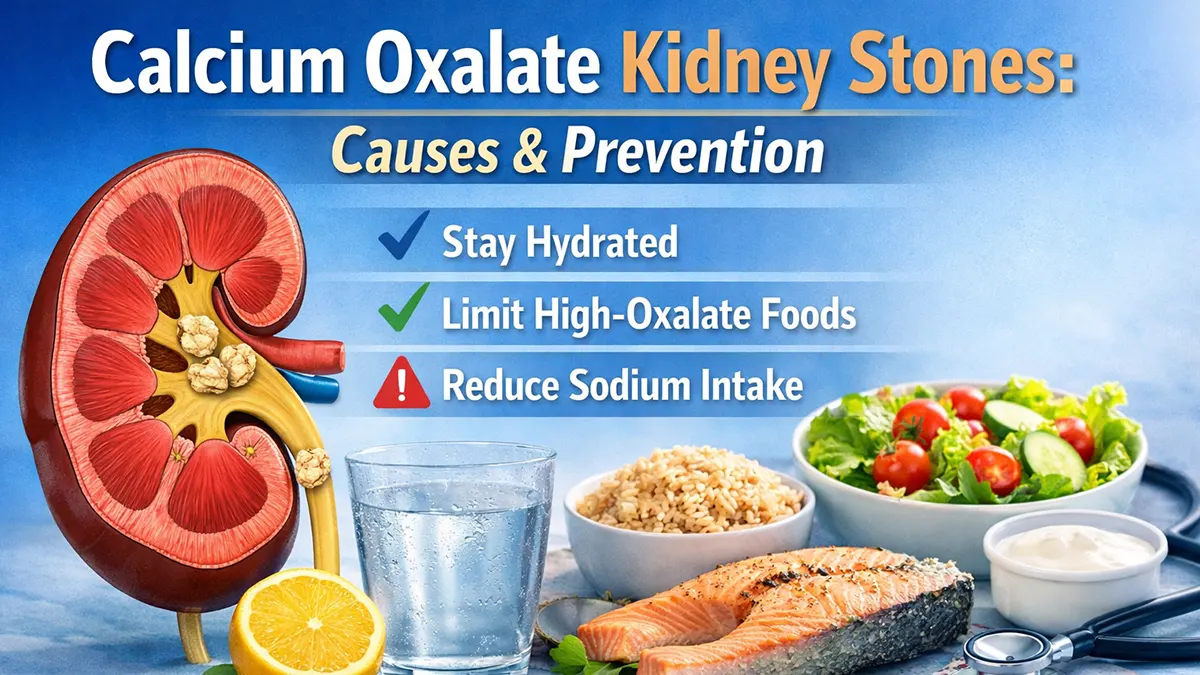
It often starts with a small mistake—skipping water, eating salty processed food, or relying on sugary drinks.
Weeks or months later, that silent buildup can turn into calcium oxalate kidney stones, the most common type of kidney stones in the United States.
Many people don’t realize that everyday diet and hydration habits directly affect how these stones form. Understanding the causes and prevention of calcium oxalate kidney stones can help you avoid severe pain and costly medical treatment.
Table of Contents
🧬 What Are Calcium Oxalate Kidney Stones?
Calcium oxalate stones are the most common kidney stones in the U.S., accounting for nearly 70–80% of cases.
They form when:
- Calcium binds with oxalate in urine
- Urine becomes concentrated (low water intake)
- Crystals grow into solid stones
👉 This explains the calcium oxalate kidney stone formation process
If you’re experiencing early discomfort, don’t ignore the signs — learn how to recognize them quickly in our kidney stone symptoms guide.
⚠️ Causes of Calcium Oxalate Kidney Stones
calcium oxalate kidney stones causes
✔ 1. Dehydration (Top Cause)
Low fluid intake leads to concentrated urine, allowing crystals to form.
✔ 2. High-Oxalate Foods
Foods rich in oxalate can increase risk:
- Spinach
- Nuts
- Chocolate
- Beets
✔ 3. High Sodium Intake (US Diet Risk)
Processed foods common in the U.S. increase calcium in urine.
✔ 4. Excess Animal Protein
High-protein diets raise uric acid and reduce protective citrate levels.
✔ 5. Low Calcium Intake (Surprising Cause)
Not getting enough calcium allows oxalate absorption to increase.
Pain can feel confusing and intense. Understand what’s happening inside your body with our detailed kidney stone pain stages explanation.
🧪 How Calcium Oxalate Stones Form (Step-by-Step)
Step 1: Urine Concentration
Low hydration → minerals become dense
Step 2: Crystal Formation
Calcium + oxalate → tiny crystals
Step 3: Crystal Growth
Crystals stick and grow
Step 4: Stone Formation
Solid stone develops
Step 5: Movement & Pain
Stone travels → causes severe pain
📊 Risk Factors (US Population Focus)
| Risk Factor | Why It Matters |
|---|---|
| Low water intake | Most common trigger |
| High salt diet | Increases calcium excretion |
| Obesity | Linked to metabolic imbalance |
| Sedentary lifestyle | Reduces fluid balance |
| Family history | Genetic risk |
🥗 Foods That Increase Risk
foods that cause calcium oxalate kidney stones
🚫 Limit these foods:
- Spinach (1 cup high oxalate)
- Almonds (small handful)
- Chocolate
- Sweetened beverages
- Processed foods (high sodium)
Your daily diet matters more than you think. Explore the best diet for kidney stones to choose the right foods and avoid triggers.
🥦 Best Foods to Prevent Calcium Oxalate Stones
diet for calcium oxalate kidney stones
✅ Include:
- Low-oxalate vegetables (broccoli, cabbage)
- Citrus fruits (lemons, oranges)
- Low-fat dairy (2–3 servings daily)
- Whole grains
- Plenty of water
🧑⚕️ Expert Diet Guide for Calcium Oxalate Kidney Stones (USA)
Managing calcium oxalate kidney stones is not about avoiding all foods — it’s about balance. U.S. healthcare experts recommend a structured dietary approach that reduces stone formation while maintaining proper nutrition.
🧠 What Experts Recommend
Doctors and dietitians in the U.S. emphasize that the right diet can significantly lower the risk of recurrence. The focus is on hydration, balanced calcium intake, and reducing excess sodium and oxalate.
🥗 Daily Diet Plan (Sample – US Standard)
🍳 Breakfast (1 serving each)
- Oatmeal (1 cup cooked)
- Low-fat milk (1 cup)
- Banana (1 medium)
🥗 Lunch (Balanced meal)
- Grilled chicken (1 serving ~3 oz)
- Brown rice (1 cup)
- Steamed broccoli (1 cup)
🍎 Snack
- Apple (1 medium)
- Yogurt (1 cup low-fat)
🍽 Dinner
- Baked salmon (1 serving ~3 oz)
- Quinoa or whole grains (1 cup)
- Mixed vegetables (1–2 cups)
💧 Hydration Plan
- Drink 2.5–3 liters daily (approx. 85–100 ounces)
- Add lemon to water for citrate benefits
- Spread intake throughout the day
⚖️ Key Dietary Rules (Expert Approved)
✔ Eat 2–3 servings of calcium daily (milk, yogurt)
✔ Limit sodium to < 2,300 mg/day
✔ Avoid excessive oxalate-rich foods
✔ Keep protein intake moderate (1–2 servings/day)
✔ Include potassium-rich foods (bananas, oranges)
🚫 Common Mistakes to Avoid
- Completely avoiding calcium (can increase risk)
- Drinking too little water
- Overeating high-protein diets
- Ignoring hidden sodium in packaged foods
⭐ Why This Guide Works
✔ Based on US dietary guidelines
✔ Supports kidney health long-term
✔ Helps prevent recurrence
✔ Easy to follow daily
🧠 Expert Insight
A balanced diet following DASH-style principles is often recommended because it helps control both hypertension and kidney stones, reducing overall risk.
💧 Hydration – The Most Powerful Prevention
how to prevent calcium oxalate kidney stones
Drink:
👉 2.5–3 liters daily (85–100 ounces)
💡 Goal: Keep urine pale yellow
Hydration is key to preventing stones. Learn which options work best in our best water for kidney stones guide.
🧠 Role of Citrate in Prevention
Citrate (found in lemon water):
- Prevents crystal formation
- Breaks down small stones
👉 That’s why lemon water is recommended in the U.S.
🚨 Symptoms to Watch
- Sharp back or side pain
- Pain during urination
- Blood in urine
- Nausea or vomiting
👉 Symptoms appear when stone moves
🩺 When to See a Doctor
Seek medical help if:
- Severe pain lasts more than a few hours
- Fever with urinary symptoms
- Blood in urine
- Vomiting or dehydration
What causes calcium oxalate kidney stones?
They form when calcium combines with oxalate in concentrated urine due to dehydration or diet.
How can I prevent calcium oxalate kidney stones?
Drink enough water, reduce sodium, and balance calcium intake.
Are calcium oxalate stones dangerous?
They can cause severe pain but are usually treatable.
Is lemon water good for kidney stones?
Yes, it increases citrate levels and helps prevent stone formation.
Can diet alone prevent kidney stones?
Diet plays a major role, but hydration is equally important.
✅ Conclusion (CTA)
Calcium oxalate kidney stones don’t form overnight—they develop silently due to daily habits.
Understanding the causes and prevention of calcium oxalate kidney stones can help you avoid pain and protect your kidney health.
👉 Drink more water
👉 Eat balanced meals
👉 Act early
Your kidneys will thank you.
Dr. Jayanth Reddy – Consultant Urologist
My Health Hospitals, Hyderabad
This content has been medically reviewed for accuracy and reliability based on current urology treatment guidelines.
According to the kidney stone symptoms NHS guide, severe flank pain can worsen during rest or nighttime.
Author
Yamanandan Reddy
Health Content Writer & Frontend Developer
Yamanandan Reddy is a health content writer and frontend developer with over 4 years of experience in website design and digital content creation. He writes research-based health articles to help readers understand symptoms, causes, treatments, and prevention methods related to common health conditions.
His articles are written using information from trusted medical sources such as the World Health Organization (WHO), Mayo Clinic, and the Centers for Disease Control and Prevention (CDC).
Sources
The information in this article is researched and verified using trusted medical resources, including:
• World Health Organization (WHO)
• Mayo Clinic
• National Institutes of Health (NIH)
• Centers for Disease Control and Prevention
⚠️ Medical Disclaimer
This content is for informational purposes only and does not replace professional medical advice. Always consult a qualified healthcare provider for diagnosis and treatment.