
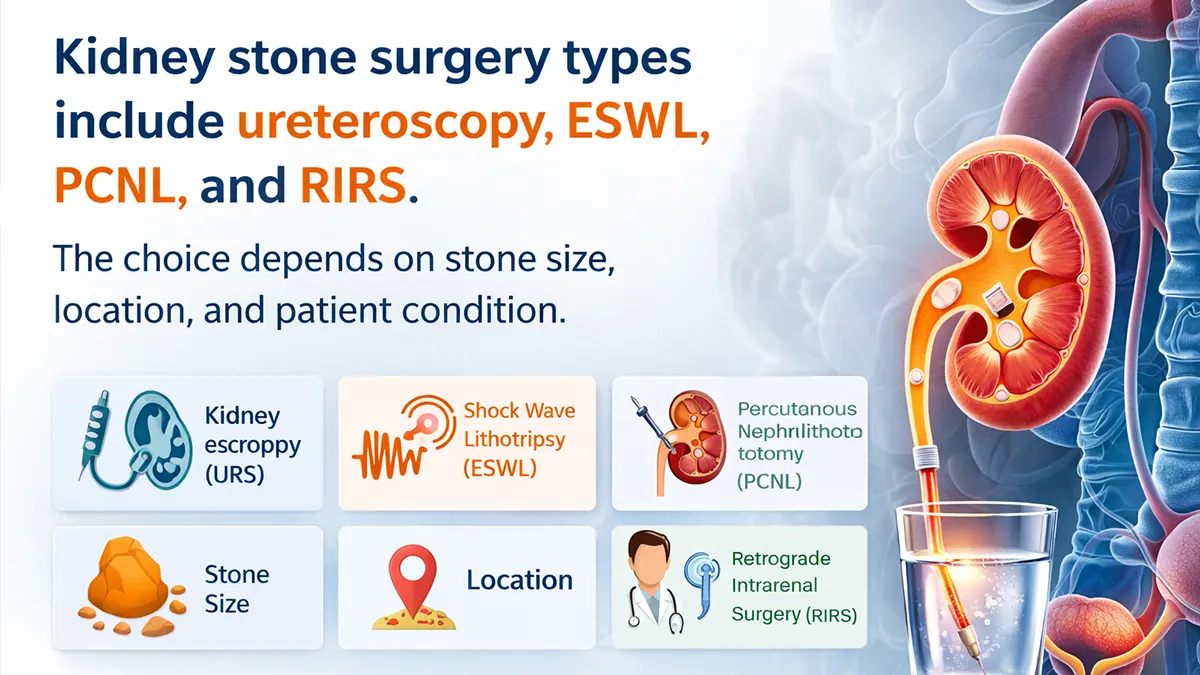
Kidney stone surgery types depend on the size, location, and composition of the stone, as well as your overall health. While many small kidney stones pass naturally with fluids and medication, larger or obstructive stones often require minimally invasive procedures for safe and effective removal. Understanding the different kidney stone surgery types can help you know what to expect, compare treatment options, and discuss the best approach with your urologist.
Kidney stones affect millions of people worldwide and can cause severe flank pain, blood in the urine, nausea, vomiting, and urinary blockage. Advances in modern urology have made kidney stone surgery safer and more precise than ever. Today, treatments such as Extracorporeal Shock Wave Lithotripsy (ESWL), Ureteroscopy (URS), Retrograde Intrarenal Surgery (RIRS), and Percutaneous Nephrolithotomy (PCNL) offer high success rates with faster recovery and less discomfort than traditional open surgery. This guide explains each procedure, when it is recommended, its benefits, possible risks, and recovery expectations to help you make informed treatment decisions.
Table of Contents
When Is Kidney Stone Surgery Needed?
Surgery is usually recommended when:
- Kidney stones are too large to pass naturally
- Severe pain persists despite medication
- Urinary blockage occurs
- Infection develops
- Kidney function is affected
- Non-surgical treatments fail
Early surgical intervention can prevent complications such as kidney damage or recurrent infections.
Doctors recommend different kidney stone surgery types based on condition.
Kidney Stone Surgery Types Overview
Understanding kidney stone surgery types improves treatment decisions.
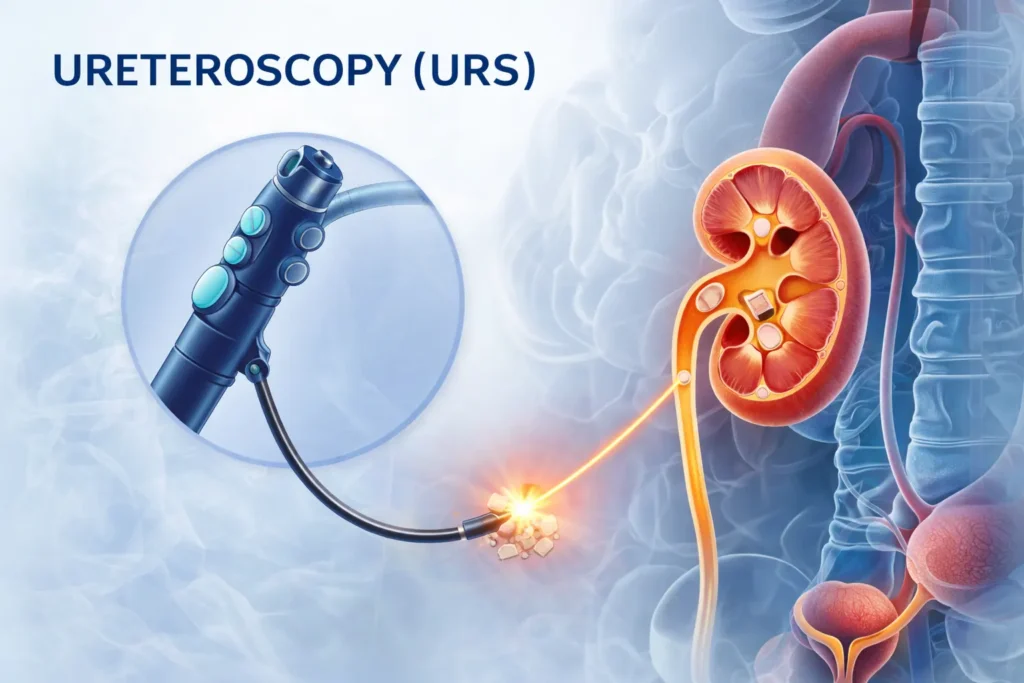
Ureteroscopy (URS)
Ureteroscopy is a minimally invasive procedure used to treat stones located in the ureter or kidney. A thin, flexible scope is inserted through the urethra and bladder to reach the stone. The stone is then removed or broken into smaller pieces using laser technology.
Advantages:
- No external incision
- Faster recovery
- Effective for small to medium stones
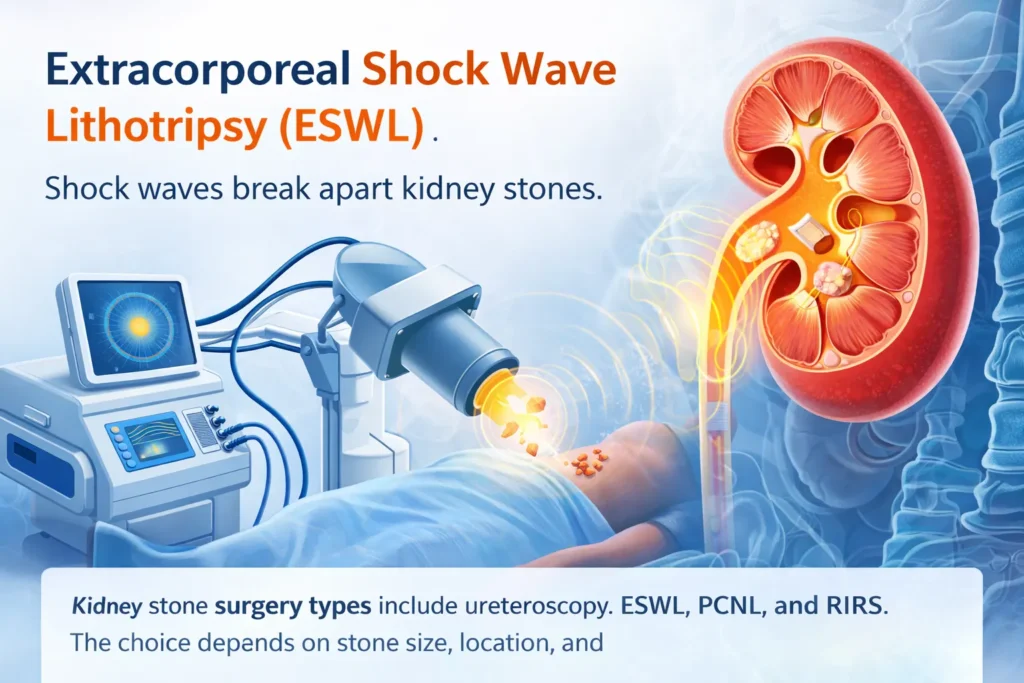
Extracorporeal Shock Wave Lithotripsy (ESWL)
ESWL uses high-energy sound waves to break kidney stones into smaller fragments that can pass naturally through urine. This non-invasive procedure is commonly used for stones located in the kidney or upper ureter.
Advantages:
- Non-surgical and painless
- Short hospital stay
- Minimal recovery time
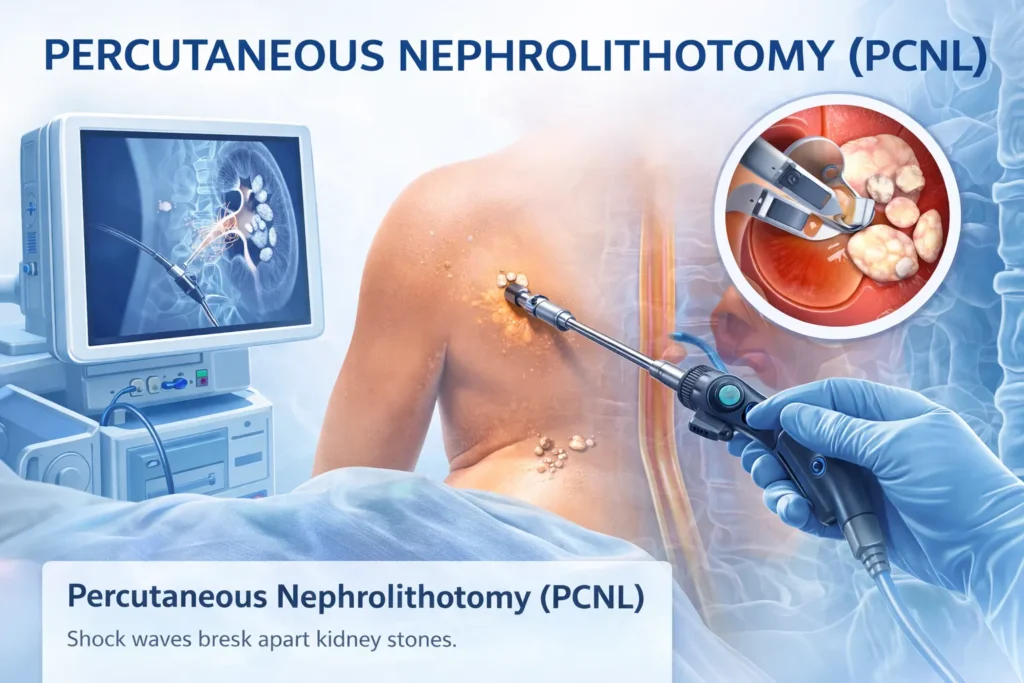
Percutaneous Nephrolithotomy (PCNL)
PCNL is recommended for large or complex kidney stones. In this procedure, a small incision is made in the back to insert a nephroscope directly into the kidney. The stone is then removed or fragmented.
Advantages:
- Highly effective for large stones
- Complete stone removal
- Suitable for complex cases
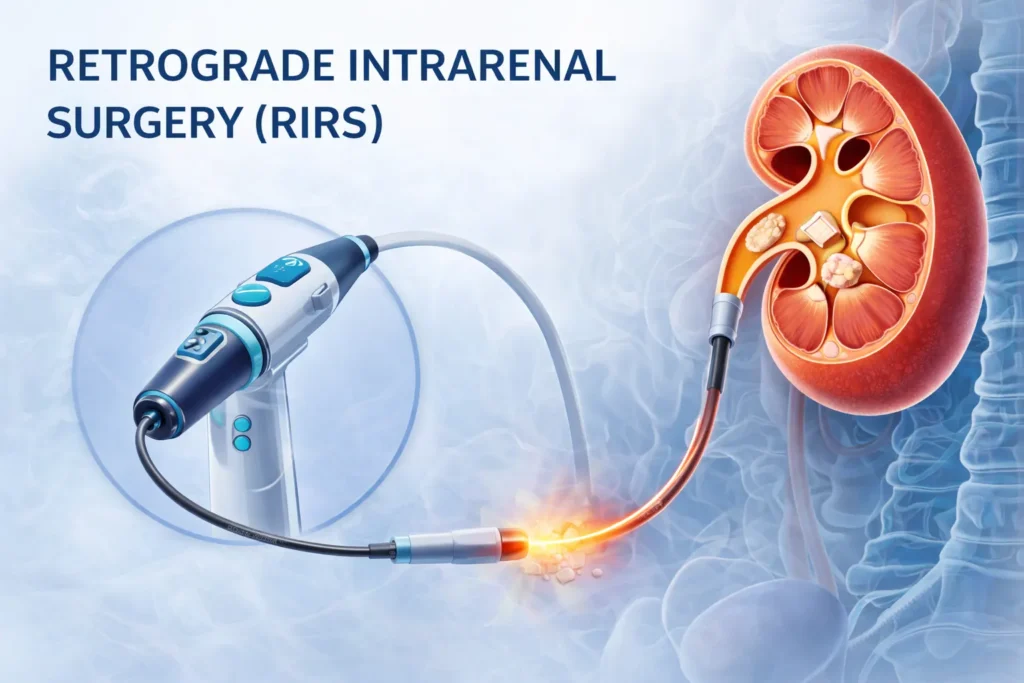
Retrograde Intrarenal Surgery (RIRS)
RIRS is an advanced endoscopic procedure used to treat stones inside the kidney. A flexible ureteroscope is passed through the urinary tract to reach the stone, which is then fragmented using laser energy.
Advantages:
- Minimally invasive
- No incision required
- High success rate
Patients should discuss kidney stone surgery types with urologist.
Choosing the Right Surgery
The appropriate surgical procedure depends on several factors:
- Size and number of stones
- Location within urinary tract
- Stone composition
- Patient’s medical history
- Presence of infection or obstruction
Urologists evaluate these factors before recommending the most suitable treatment.
Recovery After Kidney Stone Surgery
Recovery time varies depending on the procedure performed.
General recovery tips include:
- Drink adequate water
- Follow prescribed medications
- Avoid heavy physical activity initially
- Monitor urinary symptoms
- Attend follow-up appointments
Most minimally invasive procedures allow patients to resume normal activities within a few days.
✔ Kidney Stone Treatment Without Surgery
Risks and Complications
Although kidney stone surgeries are generally safe, potential risks include:
- Infection
- Bleeding
- Temporary discomfort
- Stone recurrence
- Urinary tract injury
Choosing an experienced urologist reduces the risk of complications.
Preventing Kidney Stones After Surgery
Preventive strategies are essential to avoid recurrence:
- Maintain proper hydration
- Follow a kidney-friendly diet
- Limit salt and high-oxalate foods
- Manage underlying health conditions
- Regular medical checkups
Lifestyle changes play a key role in long-term kidney health.
✔ Foods That Cause Kidney Stones
Conclusion
Kidney stone surgery has advanced significantly, offering minimally invasive and highly effective treatment options. Understanding different surgical procedures helps patients choose the best treatment approach based on their condition. Early diagnosis, expert care, and preventive strategies are essential for successful outcomes and long-term kidney health.
Frequently Asked Questions (FAQs)
1. What are the different types of kidney stone surgery?
The main kidney stone surgery types include ESWL, Ureteroscopy (URS), Retrograde Intrarenal Surgery (RIRS), Percutaneous Nephrolithotomy (PCNL), and, in rare cases, open surgery. The best option depends on the stone’s size, location, and complexity.
2. What is the best surgery for kidney stones?
There is no single best procedure for everyone. PCNL is often recommended for large or complex stones, while ESWL, URS, and RIRS are commonly used for smaller or moderately sized stones. Your urologist will recommend the most appropriate treatment.
3. Is kidney stone surgery painful?
Most kidney stone procedures are minimally invasive and performed under anesthesia, so you should not feel pain during surgery. Mild discomfort or soreness afterward is common and usually improves within a few days.
4. How long does recovery take after kidney stone surgery?
Recovery varies by procedure. Many patients return to normal activities within 2–7 days after ESWL, URS, or RIRS, while recovery after PCNL may take 2–4 weeks, depending on overall health and stone complexity.
5. Is laser surgery safe for kidney stones?
Yes. Laser lithotripsy, commonly performed during Ureteroscopy (URS) or RIRS, is considered a safe and highly effective treatment for breaking kidney stones into small fragments with minimal damage to surrounding tissues.
6. Can kidney stones come back after surgery?
Yes. Surgery removes existing stones but does not prevent new ones from forming. Drinking enough water, following a kidney stone-friendly diet, and treating underlying metabolic conditions can significantly reduce recurrence.
7. When is PCNL recommended for kidney stones?
PCNL (Percutaneous Nephrolithotomy) is usually recommended for kidney stones larger than 2 cm, multiple stones, staghorn calculi, or stones that cannot be treated successfully with ESWL or URS.
8. Which kidney stone surgery has the fastest recovery?
ESWL generally has the shortest recovery because it is non-invasive. URS and RIRS also allow relatively quick recovery, while PCNL typically requires a longer healing period due to its more invasive nature.
9. What are the risks of kidney stone surgery?
Although generally safe, potential risks include bleeding, infection, temporary blood in the urine, ureteral injury, or residual stone fragments. Your urologist will explain the benefits and risks based on your condition.
10. When should I consider kidney stone surgery?
Surgery may be needed if a kidney stone is too large to pass naturally, causes severe pain, blocks urine flow, leads to recurrent infections, damages kidney function, or fails to pass with conservative treatment.
For medically reviewed surgical guidelines, refer to the National Kidney Foundation which provides expert information on kidney stone surgery options.
Medical Expert Review
Dr. Jayanth Reddy
Consultant Urologist | My Health Hospitals, Hyderabad
This content has undergone medical review to ensure it reflects current clinical evidence, accepted urological practices, and patient-centered healthcare guidance.
Author
Yamanandan Reddy
Health Content Writer & Frontend Developer
Yamanandan Reddy is a health content writer and frontend developer with over 4 years of experience in website design and digital content creation. He writes research-based health articles to help readers understand symptoms, causes, treatments, and prevention methods related to common health conditions.
His articles are written using information from trusted medical sources such as the World Health Organization (WHO), Mayo Clinic, and the Centers for Disease Control and Prevention (CDC).
Sources
The information in this article is researched and verified using trusted medical resources, including:
• World Health Organization (WHO)
• Mayo Clinic
• National Institutes of Health (NIH)
• Centers for Disease Control and Prevention
⚠️ Medical Disclaimer
This content is for informational purposes only and does not replace professional medical advice. Always consult a qualified healthcare provider for diagnosis and treatment.