
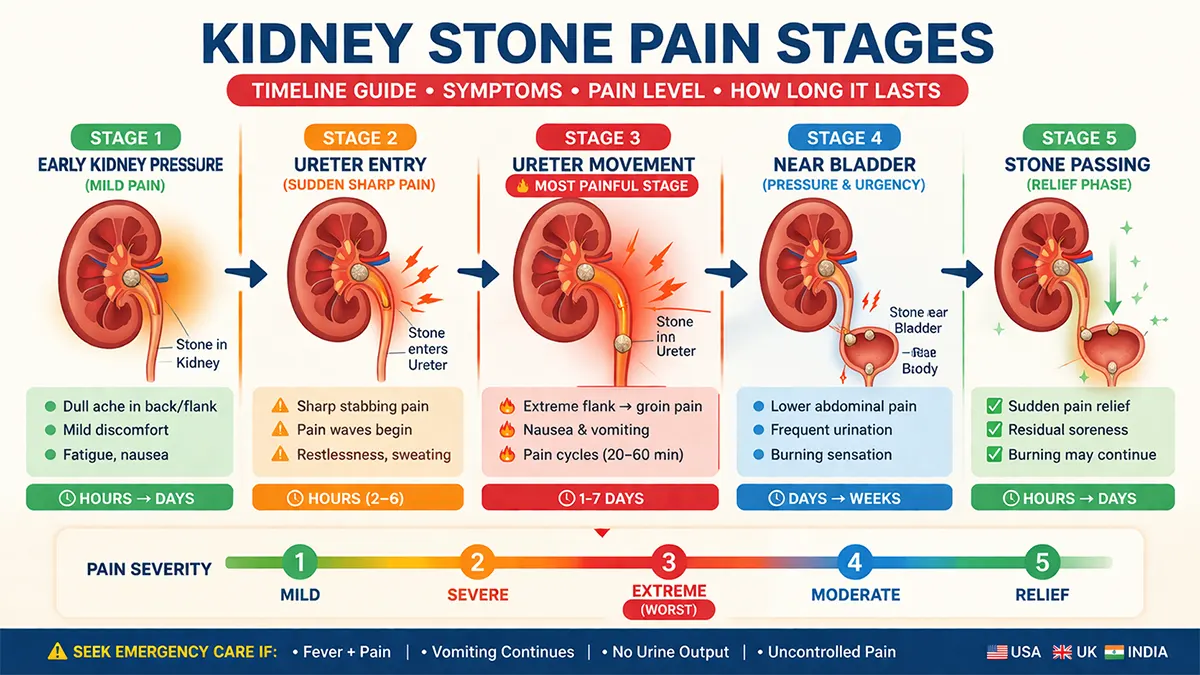
Kidney stone pain stages can feel overwhelming, unpredictable, and deeply frightening for many patients. Often described as one of the most intense pains a person can experience, this condition can disrupt daily life, sleep, and emotional well-being. Understanding the different stages of kidney stone pain helps reduce anxiety, recognize early warning signs, and take the right action for faster relief and recovery.
This complete timeline guide explains how kidney stone pain stages progress, how long each phase may last, and what symptoms to expect at every step. By learning how pain develops and changes during stone movement, patients can feel more prepared, seek timely medical care, and manage symptoms more effectively.
Table of Contents
Understanding Kidney Stone Pain Cycle
Kidney stone pain follows a predictable medical cycle, although intensity and duration vary from person to person.
Key Factors Affecting Pain Stages
- Stone size and shape
- Stone location
- Hydration level
- Urinary tract anatomy
- Infection presence
- Individual pain tolerance
Patients in the USA, UK, and India commonly report similar pain patterns despite lifestyle differences.
If you are unsure whether your symptoms match early warning signs, read our complete guide on kidney stone symptoms to understand how the condition starts and progresses.
Different Stages of Kidney Stone Pain
Stage 1: Early Kidney Pressure (Mild to Moderate Pain)
This stage begins when the stone starts blocking urine flow inside the kidney.
Symptoms
- Dull back or flank discomfort
- Intermittent mild pain
- Nausea or fatigue
- Slight urinary discomfort
At this point, many people do not realize they have a kidney stone.
👉 This stage may last from a few hours to several days.
Stage 2: Ureter Entry – Sudden Severe Pain Begins
This is when kidney stone pain becomes sharp and intense.
When the stone enters the ureter:
- Urine flow becomes restricted
- Kidney pressure increases
- Ureter muscles spasm
Common Signs
- Sharp stabbing flank pain
- Pain waves (kidney stone pain cycle)
- Restlessness and inability to sit still
- Sweating and nausea
👉 This stage often causes kidney stone pain lasting 4 hours or more.
Understanding the exact kidney stone pain location can help you recognize which stage you are in and when the stone is moving through the urinary tract.
Stage 3: Ureter Movement – Most Painful Stage
This is considered the most painful stage of kidney stone pain.
The stone moves down the ureter, causing:
- Severe muscle spasms
- Intense nerve stimulation
- Radiating pain to groin
Symptoms
- Extreme flank to groin pain
- Burning urination
- Blood in urine
- Vomiting
- Pain cycles every 20–60 minutes
Many patients report kidney stone pain lasting 4 days to 1 week during this phase.
👉 This is medically known as renal colic peak phase.
Stage 4: Near Bladder – Pain Shifts Location
As the stone approaches the bladder:
- Pain becomes lower abdominal
- Urgency to urinate increases
- Pressure sensation develops
Symptoms
- Pelvic discomfort
- Frequent urination
- Sharp urethral pain
- Anxiety and fatigue
Patients may experience kidney stone pain for up to 4 weeks if movement is slow.
Stage 5: Stone Passing – Sudden Relief
When the stone exits the urethra:
- Pain decreases dramatically
- Pressure disappears
- Urination improves
However, some patients feel:
- Residual soreness
- Burning sensation
- Mild back pain
This explains kidney stone pain after stone passes.
Many patients find relief by following simple lifestyle changes and natural methods. Explore effective kidney stone home remedies that may help ease pain during early stages.
How Long Do Kidney Stone Pain Stages Last?
| Stage | Typical Duration | Pain Level |
|---|---|---|
| Early Kidney Stage | Hours–Days | Mild |
| Ureter Entry | Hours | Severe |
| Ureter Movement | Days–Week | Extreme |
| Near Bladder | Days–Weeks | Moderate |
| After Passing | Days | Mild |
Kidney Stone Stage 4 Pain Explained
Stage 4 pain occurs when:
- Stone is near bladder
- Ureter inflammation persists
- Urinary tract irritation continues
Patients may feel:
✔ Constant pressure
✔ Burning urination
✔ Mild lingering flank pain
Why Kidney Stone Pain Comes in Waves
Kidney stone pain cycles happen due to:
- Ureter muscle contractions
- Intermittent urine blockage
- Pressure fluctuations
This creates the classic kidney stone pain cycle pattern.
Kidney Stone Pain for 1 Week – Is It Normal?
Yes.
Pain lasting 1 week or more is common if:
- Stone is 5–7 mm
- Hydration is low
- Movement is slow
- Infection exists
Medical consultation is recommended if pain continues.
Kidney Stone Pain for 4 Weeks – When to Worry
Persistent pain for 4 weeks or longer may indicate:
⚠ Stone stuck in ureter
⚠ Kidney swelling
⚠ Infection
⚠ Need for medical intervention
Doctors in the USA and UK guidelines suggest imaging if pain persists.
Stages of Passing Kidney Stone Pain
Passing a kidney stone involves:
1️⃣ Initial pressure
2️⃣ Sudden severe attack
3️⃣ Peak ureter pain
4️⃣ Lower abdominal discomfort
5️⃣ Relief phase
Understanding these stages reduces panic and improves treatment timing.
Proper hydration plays a crucial role in reducing pain duration and preventing recurrence. Discover the best water for kidney stones to support faster recovery.
Kidney Stone Most Painful Stage – Medical Insight
The ureter movement stage is most painful because:
- Ureter has dense nerve supply
- Muscle spasms are intense
- Pressure rises rapidly
This stage is often compared to:
👉 Childbirth pain
👉 Severe trauma pain
When to Seek Emergency Care
Immediate medical help is needed if:
- Fever with pain
- Continuous vomiting
- No urine output
- Severe uncontrolled pain
- Blood clots in urine
Prevention Tips to Reduce Pain Severity
✔ Drink 3–4 liters of water daily
✔ Follow kidney stone diet plan
✔ Stay physically active
✔ Avoid high oxalate foods
✔ Monitor urine color
✔ Take prescribed medications
Kidney stone pain stages vary from mild discomfort to severe radiating pain depending on the stone’s location and movement. Understanding the stages of kidney stone pain helps patients recognize symptoms early, seek timely care, and reduce complications. Each phase of the kidney stone pain cycle brings different sensations, making awareness essential for effective pain management.
What are the kidney stone pain stages?
Kidney stone pain stages usually begin with mild back discomfort, progress to intense ureter pain, then bladder pressure, and finally relief after passing the stone. Pain intensity changes as the stone moves.
Why does kidney stone pain continue after the stone passes?
Kidney stone pain after stone passes can occur due to ureter irritation, inflammation, or residual fragments. Mild discomfort may continue for a few days while tissues heal.
Can kidney stone pain last for 4 weeks?
Yes, kidney stone pain for 4 weeks may happen if the stone is stuck, moving slowly, or causing infection. Persistent pain requires medical evaluation to prevent complications.
What are the different stages of kidney stone pain?
Different stages of kidney stone pain include kidney pressure pain, severe ureter colic, bladder discomfort, and post-pass healing pain. Each stage has distinct symptoms and intensity.
What is the kidney stone pain cycle?
The kidney stone pain cycle refers to waves of sharp pain followed by temporary relief. This happens as the ureter muscles contract to push the stone downward.
Can kidney stone pain last only 4 hours?
Yes, kidney stone pain for 4 hours can occur during sudden ureter blockage. Pain may come in intense waves and then reduce if the stone shifts position.
Is kidney stone pain normal for 1 week?
Kidney stone pain for 1 week is common if the stone is slowly passing. Hydration, medications, and medical monitoring help reduce pain duration.
What are the stages of passing kidney stone pain?
Stages of passing kidney stone pain include flank pain, radiating groin pain, bladder urgency, and burning sensation during urination. Pain reduces after stone passage.
Can kidney stone pain last 4 days?
Kidney stone pain for 4 days may occur depending on stone size and location. Smaller stones pass faster, while larger stones cause prolonged discomfort.
Which is the most painful kidney stone stage?
The kidney stone most painful stage is usually when the stone moves through the ureter. This causes severe, wave-like pain known as renal colic.
What are kidney stone stages of pain?
Kidney stone stages of pain progress from dull kidney ache to severe colicky pain, then urinary discomfort, followed by recovery-phase soreness.
What is kidney stone stage 4 pain?
Kidney stone stage 4 pain refers to the final passing phase, where patients feel bladder pressure and burning urination before complete relief.
How long do stages of kidney stone pain last?
Stages of kidney stone pain can last from a few hours to several weeks. Duration depends on stone size, hydration, and medical treatment.
Final Medical Insight
Kidney stone pain follows a structured physiological timeline, not random episodes. Recognizing the different stages of kidney stone pain helps patients respond early, manage symptoms effectively, and prevent complications.
Understanding kidney stone pain stages helps patients respond early, reduce complications, and improve recovery outcomes.
Understanding this timeline is essential for long-term kidney health, especially in high-risk populations across the USA, UK, and India.
Medically Reviewed By:
Dr. Jayanth Reddy – Consultant Urologist
My Health Hospitals, Hyderabad
This content has been medically reviewed for accuracy and reliability based on current urology treatment guidelines.
According to the Mayo Clinic, kidney stone recurrence is common without proper prevention. Staying well hydrated, following a balanced diet, and managing underlying medical conditions can significantly reduce the risk of new stone formation.
Author
Yamanandan Reddy
Health Content Writer & Frontend Developer
Yamanandan Reddy is a health content writer and frontend developer with over 4 years of experience in website design and digital content creation. He writes research-based health articles to help readers understand symptoms, causes, treatments, and prevention methods related to common health conditions.
His articles are written using information from trusted medical sources such as the World Health Organization (WHO), Mayo Clinic, and the Centers for Disease Control and Prevention (CDC).
Sources
The information in this article is researched and verified using trusted medical resources, including:
• World Health Organization (WHO)
• Mayo Clinic
• National Institutes of Health (NIH)
• Centers for Disease Control and Prevention (CDC)
Disclaimer
The information provided on HealthyWayCare.com is for educational and informational purposes only. It should not be considered medical advice, diagnosis, or treatment. Always consult a qualified healthcare professional before making any medical decisions or starting any treatment.
2 thoughts on “Kidney Stone Pain Stages Explained (Timeline Guide)”