
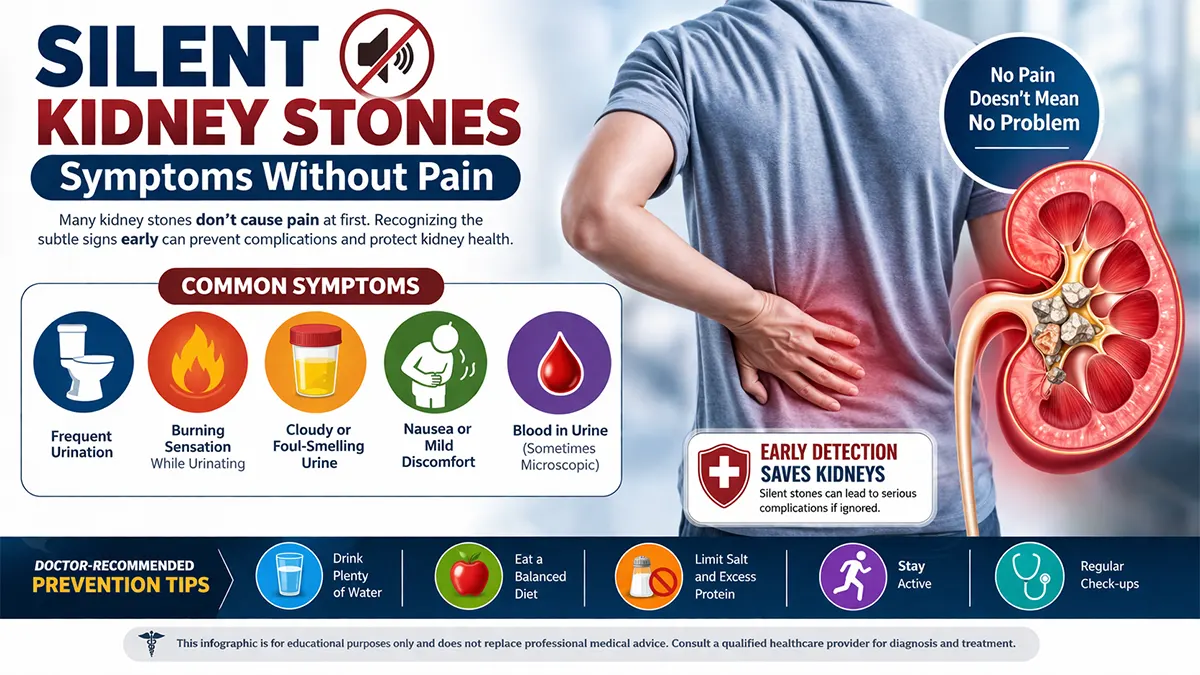
What if you had kidney stones… but no pain at all?
It sounds unlikely, but many people live with silent kidney stones without symptoms or pain, only discovering them during routine scans. By the time symptoms appear, the stone may already be large or causing complications.
Understanding silent kidney stones symptoms without pain can help you detect the problem early and protect your kidney health.
Table of Contents
🧠 What Are Silent Kidney Stones?
Silent kidney stones are stones that form in the kidneys but do not cause noticeable pain or symptoms initially.
Unlike typical kidney stones that cause severe pain (renal colic), silent stones:
- Stay in the kidney without moving
- Do not block urine flow
- Do not irritate nerves
👉 This is why many cases go unnoticed.
If you’re worried about when pain might start, explore how it develops step by step in our guide on kidney stone pain stages — it helps you recognize each phase before it becomes severe.
⚠️ Silent Kidney Stones Symptoms Without Pain
Even without pain, your body may show subtle signs.
✔ Common silent symptoms:
- Frequent urination
- Mild discomfort in back or abdomen
- Cloudy or foul-smelling urine
- Occasional nausea
- Feeling of incomplete urination
- Urinary tract infections (UTIs)
- Blood in urine (sometimes microscopic)
👉 These are often mistaken for minor issues but may be early signs of kidney stones without pain.
Recognizing silent kidney stones symptoms without pain is important because these signs are often mild and easy to ignore.
👩 Silent Kidney Stones in Women
Women may experience:
- Pelvic discomfort
- UTI-like symptoms
- Burning sensation during urination
- Lower abdominal pressure
👉 Silent kidney stones are often confused with infections in females.
🔍 Why Do Some Kidney Stones Not Cause Pain?
Many people ask:
👉 Why are kidney stones silent?
✔ Reasons:
- Stone remains in kidney (no movement)
- No blockage in urine flow
- Small stone size
- Minimal irritation
👉 Pain usually begins only when the stone starts moving.
Looking for safe ways to manage symptoms at home? Discover practical and doctor-backed tips in kidney stone home remedies to support relief and recovery.
Certain lifestyle factors increase the risk of silent kidney stones symptoms without pain, especially dehydration and poor diet.
⚠️ Risks of Silent Kidney Stones
Even without pain, silent stones are not harmless.
🚨 Possible risks:
- Sudden severe pain later
- Kidney infection
- Urinary blockage
- Kidney damage (if untreated)
👉 Silent stones can turn dangerous without warning.
Doctors often detect silent kidney stones symptoms without pain during routine scans when no clear symptoms are present.
📊 Silent vs Painful Kidney Stones
| Feature | Silent Kidney Stones | Painful Kidney Stones |
|---|---|---|
| Pain | No pain | Severe pain |
| Detection | Often accidental | Symptom-based |
| Risk | Hidden danger | Immediate discomfort |
| Movement | Usually stationary | Moving through ureter |
| Awareness | Low | High |
🧬 Causes of Silent Kidney Stones (2026 Trends)
Doctors identify key causes:
- Low water intake
- High salt diet
- Excess protein
- Sedentary lifestyle
- Genetic factors
- Climate (hot regions → dehydration)
👉 In 2026, lifestyle changes are increasing silent cases globally.
🔬 How Are Silent Kidney Stones Diagnosed?
Since symptoms are minimal, diagnosis usually happens through:
- Ultrasound
- CT scan
- Urine test
- Blood test
👉 Many cases are found during routine health checkups.
💊 Treatment Options
Treatment depends on size and risk.
✔ Options include:
- Monitoring (small stones)
- Increased water intake
- Medications
- Shock wave therapy (ESWL)
- Surgery (rare cases)
👉 Early detection = easier treatment.
Understanding silent kidney stones symptoms without pain helps prevent future health risks and protects kidney function.
🚨 When to See a Doctor
Even without pain, consult a doctor if you have:
- Repeated UTIs
- Blood in urine
- Persistent urinary discomfort
- Family history of stones
❓ PAA FAQs
Can kidney stones exist without pain?
Yes, silent kidney stones can remain in the kidney without causing pain.
How do you know if you have silent kidney stones?
They are usually detected through scans like ultrasound or CT.
Are silent kidney stones dangerous?
Yes, they can become painful or cause complications if untreated.
Can silent kidney stones go away on their own?
Small stones may pass naturally, but monitoring is important.
Do silent kidney stones always become painful?
Not always, but many eventually cause symptoms if they grow or move.
✅ Conclusion
Silent kidney stones may not cause pain — but they should never be ignored.
Recognizing silent kidney stones symptoms without pain can help you act early, avoid complications, and maintain long-term kidney health.
👉 Don’t wait for pain to take action. Prevention and early detection are the keys.
Dr. Jayanth Reddy – Consultant Urologist
My Health Hospitals, Hyderabad
This content has been medically reviewed for accuracy and reliability based on current urology treatment guidelines.
According to the kidney stone symptoms NHS guide, severe flank pain can worsen during rest or nighttime.
Author
Yamanandan Reddy
Health Content Writer & Frontend Developer
Yamanandan Reddy is a health content writer and frontend developer with over 4 years of experience in website design and digital content creation. He writes research-based health articles to help readers understand symptoms, causes, treatments, and prevention methods related to common health conditions.
His articles are written using information from trusted medical sources such as the World Health Organization (WHO), Mayo Clinic, and the Centers for Disease Control and Prevention (CDC).
Sources
The information in this article is researched and verified using trusted medical resources, including:
• World Health Organization (WHO)
• Mayo Clinic
• National Institutes of Health (NIH)
• Centers for Disease Control and Prevention
⚠️ Medical Disclaimer
This content is for informational purposes only and does not replace professional medical advice. Always consult a qualified healthcare provider for diagnosis and treatment.
I’m often to blogging and i really appreciate your content. The article has actually peaks my interest. I’m going to bookmark your web site and maintain checking for brand spanking new information.